You know that moment when a warm dip comes out of the oven?
Everyone in the room just… stops. The smell hits them. And suddenly, they’re all crowding around your kitchen counter.
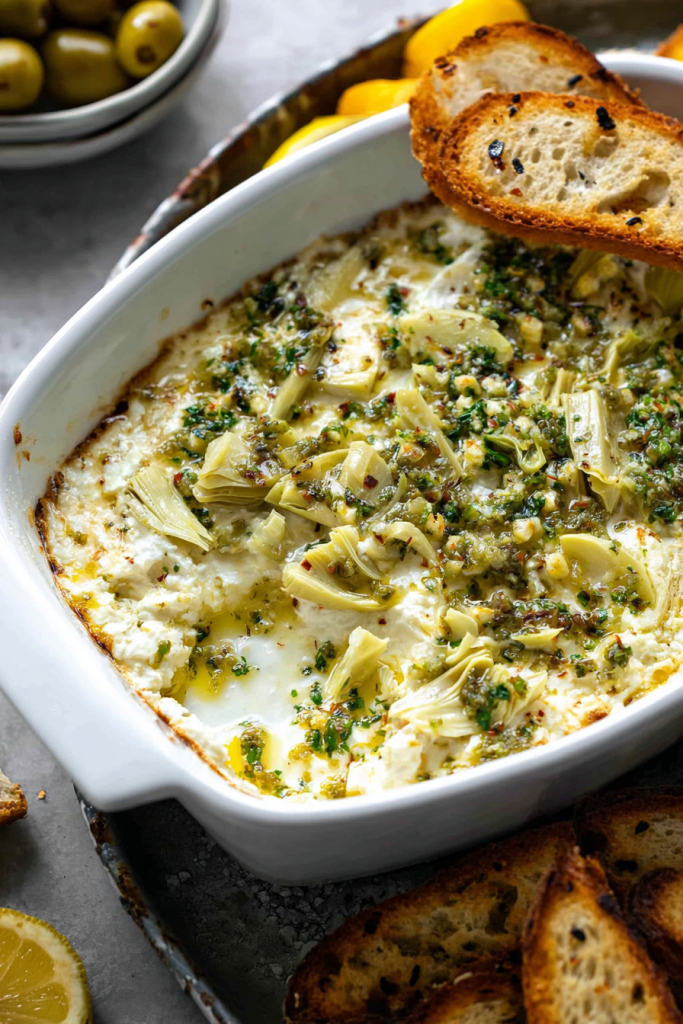
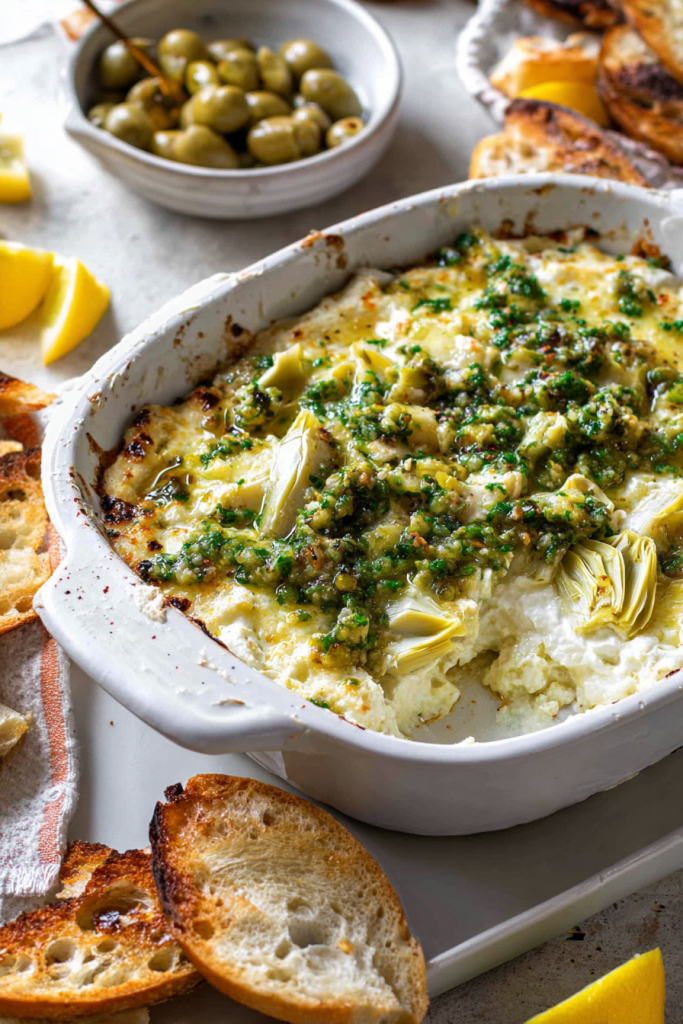
That’s exactly what happens with this baked feta and artichoke dip.
I stumbled on this recipe a few years back during the holidays. Total chaos mode. I needed something that looked fancy but wouldn’t stress me out. This dip? It was perfect.
The tangy feta mixed with those tender artichokes… honestly, guests kept coming back for more. I’d turn around and the bowl would be empty again.
But here’s what really makes this different.
The olive gremolata on top.
Most people stop at just baking a dip. Not me. I throw on this bright, crunchy topping that takes everything up about three notches. It’s fresh. It’s textured. And it turns a simple dip into something your friends will actually remember.
Why I Keep Making This
I’ve tried so many dip recipes over the years. Too many, probably.
This one wins every single time.
The feta gives you that bold, salty punch. Greek yogurt keeps it creamy without making you feel like you need a nap after. And the mozzarella? That’s what gives you those cheese pulls that make people go “oooh.”
The artichokes balance everything out with a subtle earthiness. I always grab the marinated kind because they’re already seasoned. They’re tender. And honestly? They save me time while tasting better than the plain ones.
Now, the olive gremolata.
Traditional gremolata is just parsley, lemon, and garlic. I throw in Castelvetrano olives and pine nuts. Suddenly you’ve got this topping that tastes like it came from an actual restaurant.
Works for Literally Any Party
Game night? Check.
Fancy dinner party? Check.
Random Tuesday when friends drop by? Also check.
I’ve served this warm on cold winter nights. I’ve served it at room temperature during summer barbecues. It adapts to whatever you need.
The best part?
You can make everything the day before. Mix your dip. Prep your gremolata. Store them separately. When people show up, just pop it in the oven.
No last-minute panic. No stress.
Once it’s in the oven, you’ve got almost 30 minutes free. No stirring. No babysitting. Just set the timer and go do literally anything else.

Let’s Talk Ingredients
Each ingredient here has a job. Understanding what they do helps you nail this recipe every time.
Feta Cheese: Get the block, not the crumbled stuff. Block feta is so much creamier and fresher. It crumbles super easily with a fork. Pre-crumbled feta? It’s usually dry and has weird additives to keep it from clumping.
Greek Yogurt: I use the whole-milk kind. It adds richness without that heavy cream cheese feeling. You get protein. You get tang. And the dip doesn’t make you feel stuffed after two bites.
Mayonnaise: I go with avocado oil-based mayo. Better for you. Creates that smooth texture that binds everything. Plus it helps create that gorgeous golden, bubbly top when it bakes.
Mozzarella: This is your mild cheese that calms down the strong feta. It melts beautifully. Gives you that stretchy, gooey situation everyone expects from a hot dip. Use the shredded kind—it mixes in way better.
Marinated Artichoke Hearts: These are already packed in oil and herbs. They bring complexity without extra work. I chop them roughly so you get a piece in every bite. The texture contrast with the cheese is chef’s kiss.
Garlic: Fresh. Grated. That’s it. Two cloves give you enough flavor without turning this into a garlic bomb. When you grate it, the tiny pieces spread throughout the dip instead of giving someone a surprise garlic chunk.
Red Pepper Flakes: Just a quarter teaspoon gives gentle warmth. You can bump it up if you like heat. The little red specks also make the dip look prettier.
The Gremolata Stuff
Castelvetrano Olives: These Sicilian beauties are buttery and mild. Way less briny than other olives. Even people who claim they “don’t like olives” usually like these. I smash them gently to break them into chunks with more surface area for flavor.
Pine Nuts: Delicate. Buttery. Crunchy. They add richness without competing with anything else. Out of pine nuts? Walnuts work great too.
Fresh Parsley: Flat-leaf Italian parsley tastes best. It brings brightness and this slight peppery thing that’s hard to describe. Chop it fine so it gets everywhere in the gremolata.
Lemon Zest: This is pure citrus aroma with no liquid added. I use a microplane to get super fine shreds. Just the yellow part—the white pith underneath is bitter. This cuts right through the richness of the cheese.
Extra-Virgin Olive Oil: Quality matters here. The oil coats everything and helps the flavors come together. It makes the topping glossy and honestly just looks appetizing.
How Long This Takes
| Metric | Time/Amount |
|---|---|
| Prep Time | 10 minutes |
| Cook Time | 15 minutes |
| Total Time | 25 minutes |
| Servings | 4-6 people |
| Difficulty | Easy |
Everything You Need
| Ingredient | Quantity | Notes |
|---|---|---|
| Feta cheese block | 8 oz | Use block, not crumbled |
| Marinated artichoke hearts | 12 oz jar | Drained and chopped |
| Plain whole-milk Greek yogurt | 1/2 cup | Full-fat preferred |
| Mayonnaise | 1/2 cup | Avocado oil-based recommended |
| Shredded mozzarella cheese | 1/2 cup | Pre-shredded works fine |
| Garlic cloves | 2 | Freshly grated |
| Crushed red pepper flakes | 1/4 tsp | Adjust to taste |
| Pitted Castelvetrano olives | 1/2 cup | Can substitute other green olives |
| Pine nuts | 1/4 cup | Can substitute walnuts |
| Fresh parsley | 3 Tbsp | Finely chopped |
| Lemon zest | 1 tsp | From about half a lemon |
| Extra-virgin olive oil | 3 Tbsp | Good quality preferred |
| Salt | Pinch | For gremolata |
| Additional red pepper flakes | Pinch | For gremolata |
| Serving options | As needed | Crostini, pita, or chips |
What You Need Equipment-Wise
Nothing fancy.
An 8×8-inch baking dish is perfect. I like glass or ceramic because they go straight from oven to table. Keeps the dip warm longer. Saves you from dirtying another dish.
Two mixing bowls. One for the dip. One for the gremolata.
A cutting board and sharp knife for chopping your olives, artichokes, and parsley.
A microplane grater makes the garlic and lemon zest so much easier.
That’s it. If you have a basic kitchen, you’re good to go.
Segment 2: Step-by-Step Instructions
Before You Start
Grab everything. Put it all on your counter.
The French call this “mise en place.” Fancy way of saying “get your stuff together before you start cooking.”
I drain the artichokes first. They need a few minutes to lose that excess liquid while I’m doing other prep.
Preheat your oven to 375°F. This temperature is the sweet spot—hot enough to heat everything through without burning the top.
While it’s warming up, spray your baking dish with non-stick spray. Trust me on this. It prevents sticking and makes cleanup way easier.
Step 1: Break Down That Feta
Drop your feta block into a large mixing bowl.
Grab a fork. Press down hard to break it into crumbles.
Way easier than using your hands. The pieces don’t need to be perfect. Roughly uniform is fine. Some bigger chunks? Totally okay—they’ll soften when it bakes.
The feta fights back at first. Keep pressing.
After about a minute, you’ll have a bowl full of loose crumbles. That textured base is what makes the final dip interesting instead of just smooth and boring.
Now toss in your chopped artichoke hearts.
Bite-sized pieces. Not too fine. I aim for quarters or a bit smaller. This way you actually taste the artichoke in every scoop instead of just… cheese.

Step 2: Make It Creamy
Time for the Greek yogurt and mayo.
Pour them over your feta and artichokes. These two ingredients turn everything from dry crumbles into an actual dip.
Grab a sturdy spoon. Start stirring using a folding motion.
It looks dry at first. Weirdly dry.
Keep going.
After about two minutes of steady stirring, the ingredients start coming together. You’ll get this thick, spreadable consistency that actually looks like dip.
Throw in your shredded mozzarella.
Stir until you can’t see separate pockets of white cheese anymore. The mixture should look creamy and uniform. No streaks of just mayo. No dry spots of just feta.
Step 3: Add the Flavor
Grate your garlic cloves right into the bowl.
Fresh garlic is everything here. Grating it means you get these tiny pieces that spread everywhere. No one gets a surprise chunk of raw garlic that burns their mouth.
Sprinkle in the red pepper flakes.
I use a quarter teaspoon for gentle warmth. Want more heat? Go for half a teaspoon. Your call.
Give it one final stir to mix in the seasonings completely.
Now taste it.
Should be tangy from the feta and yogurt. Creamy from the mayo. Slightly salty. Remember—baking makes flavors stronger, so if it tastes perfect now, it might be too salty later. Slightly under-seasoned is actually ideal.
Step 4: Get It in the Oven
Spoon your mixture into the prepared baking dish.
Use the back of your spoon to spread it evenly to the edges. Even layers bake uniformly. No thick spots that stay cold while the edges burn.
I like making little swirls on top. Makes it look prettier.
Pop it on the center rack of your preheated oven.
Set your timer for 28 minutes.
The dip needs this time to heat all the way through. You’ll know it’s done when the edges turn golden and the whole surface is bubbling like crazy.
Now you’ve got time to make the gremolata. Perfect timing—it comes together fast while the oven does its thing.
Step 5: Smash Those Olives
Put your olives on a cutting board.
Take your largest chef’s knife. Lay it flat over the olives. Press down firmly with your palm.
You’ll feel them break. Hear them crack.
The technique breaks them into irregular chunks and releases all those flavorful oils.
Don’t have a big knife? Use the bottom of a heavy mug. Works just as well.
You want broken olives, not paste. These rustic, chunky pieces add texture to the finished dip.
Scoop up the smashed olives and move them to your second mixing bowl. They should be roughly chopped but still chunky. Some bigger pieces, some smaller. That variation is actually good.
Step 6: Build the Gremolata
Add your chopped pine nuts to the bowl with the olives.
The nuts should be roughly the same size as the olive pieces. This helps everything distribute evenly. Every bite gets crunch.
Sprinkle in your finely chopped parsley.
Fresh parsley is crucial. Dried doesn’t give you that same brightness. I pile mine on the cutting board and rock my knife through it over and over until the pieces are tiny.
Time for the lemon zest.
Hold your lemon over the bowl. Use a microplane to grate just the yellow outer layer.
Stop when you see white. That’s the pith. It’s bitter and will ruin your gremolata.
One teaspoon gives you plenty of citrus aroma without overpowering anything.
Step 7: Bring It Together
Drizzle the extra-virgin olive oil over everything.
The oil is your binder. Your flavor carrier. It coats all the ingredients and helps the gremolata stick to the hot dip instead of just sliding off.
Add a small pinch of salt. Another pinch of red pepper flakes.
These seasonings enhance everything without taking over.
Stir gently with a spoon.
The finished gremolata should look glossy. Everything should be evenly mixed. No dry spots. No oil puddles.
Set it aside while the dip finishes baking.
Step 8: Put It All Together
Your timer goes off.
Carefully pull the baking dish out of the oven. It should be bubbling like crazy with golden-brown edges. Some darker spots on the surface? That’s flavor, not burning.
Let it rest for five minutes.
This cooling period makes it easier to serve. The bubbling calms down. The flavors settle and balance out.
After five minutes, spoon that olive gremolata over the entire surface.
Edge to edge. Maximum coverage.
The bright green herbs against the golden dip? Gorgeous contrast.
What to Serve It With
This dip needs sturdy vehicles. Things that won’t snap when you scoop.
Here’s what I use:
Homemade Crostini: Slice a French baguette into half-inch rounds. Brush with olive oil. Arrange on a baking sheet. Toast at 400°F for five to seven minutes until golden. Hit them with a light sprinkle of salt while they’re still warm.
Grilled Pita Wedges: Cut pita rounds into six triangles. Brush with olive oil. Grill over medium heat for two minutes per side. That slight char adds this smoky flavor that pairs so well with the dip.
Store-Bought Pita Chips: Short on time? Quality pita chips work perfectly. Go for plain or lightly seasoned. Skip the heavily flavored ones—they fight with the dip instead of complementing it.
Fresh Vegetables: Sturdy veggies hold up to the thick dip. Cucumber rounds. Celery sticks. Bell pepper strips. Carrot chips. These add refreshing crunch and make the whole spread feel lighter.
Temperature Game
I love this dip both hot and at room temperature.
Straight from the oven?
Molten. Irresistible. The cheese stretches with every scoop. You get that satisfying pull that makes people grab their phones to take pictures.
At room temperature?
The flavors pop even more. The feta’s tanginess intensifies. The gremolata’s herbs shine brighter. Perfect for outdoor gatherings where you can’t keep things hot.
For parties, I usually let it cool for 15 minutes before serving. Nice middle ground. Still warm. No burnt tongues. The texture is perfect—soft but not runny.
What to Do with Leftovers
Leftover dip is rare. Like, really rare.
But when it happens, I’ve got moves:
Sandwich Spread: Toast your favorite bread. Spread a thick layer of leftover dip. Add sliced cucumber, tomatoes, sprouts, and red onion. Boom. Mediterranean-inspired sandwich that’s actually satisfying.
Pasta Sauce: Mix leftover dip with hot cooked pasta. Add pasta water a tablespoon at a time until you hit the consistency you want. The dip coats the pasta beautifully. Quick, creamy dinner done.
Stuffed Vegetables: Use the dip to stuff hollowed tomatoes or bell peppers. Bake until the veggies soften. Makes an elegant side dish or light lunch that looks way fancier than the effort required.
Pizza Topping: Spread leftover dip on pizza dough instead of tomato sauce. Top with more mozzarella and whatever vegetables you have. The dip creates this creamy, flavorful base that’s completely different from regular pizza.
Segment 3: Storage, FAQs, and Final Tips
Make It Ahead (Your Sanity Will Thank You)
Planning ahead changes everything. Entertaining goes from stressful to actually enjoyable.
This dip? Perfect for making ahead.
The Dip Base: Mix all your dip ingredients up to 24 hours before you need them. Transfer the unbaked mixture to your baking dish. Cover tightly with plastic wrap. Refrigerate.
When guests arrive, peel off the plastic and bake as directed.
You might need three to five extra minutes since you’re starting cold. No big deal.
The Gremolata: Combine everything except the olive oil up to 24 hours ahead. Store in an airtight container in the fridge. Add the olive oil right before serving for the freshest flavor and best texture.
This means when people show up, you just bake and assemble.
I prep both components the night before constantly. Leaves my entire day free for other stuff. Has saved me during every holiday season for the past three years.
How to Store Leftovers
In the Fridge: Move cooled dip to an airtight container. Stored properly, it keeps for four days.
I use glass containers. They don’t absorb flavors like plastic does.
Got leftover gremolata separate from the dip? Store them separately. Keeps the herbs vibrant instead of wilted and sad. But if everything’s already mixed, storing together is fine.
Freezing? Nope. Don’t do it.
The dairy separates when you thaw it. Creates this weird, grainy texture nobody wants. The yogurt and mayo break down really badly. Always make it fresh or keep it refrigerated. Those are your only good options.
How to Reheat
Microwave: Single serving goes in a microwave-safe dish. Heat on medium power for 30-second bursts. Stir between each one to prevent hot spots.
Usually takes about 90 seconds total.
Oven: Reheating bigger portions? Use your oven. Preheat to 350°F. Transfer dip to an oven-safe dish. Cover with foil so it doesn’t dry out. Heat for 12 to 15 minutes.
Want a slightly crispy top? Remove the foil for the last three minutes.
Stovetop: Quick pasta sauce mode. Reheat dip in a skillet over low heat. Stir constantly. Add pasta water to thin it out as needed. This method is perfect for repurposing leftovers into something completely different.
Questions People Always Ask
Can I use crumbled feta instead of block?
You can, but block feta is way better.
Pre-crumbled feta is usually drier. It has anti-caking agents that mess with the texture. If you’re stuck with crumbled feta, add an extra tablespoon of Greek yogurt to make up for the missing moisture.
What if I can’t find Castelvetrano olives?
Other mild green olives work. Try Picholine. Cerignola. Even basic green olives.
Skip the really briny or strong varieties like Kalamata. They overpower everything else. The buttery character of Castelvetranos is unique, but other options still taste delicious.
Can I make this dairy-free?
Yeah, but you need several swaps.
Use dairy-free feta alternatives—most stores carry them now. Swap the Greek yogurt for coconut yogurt or cashew-based alternatives. Replace regular mozzarella with dairy-free shredded cheese.
The flavor changes a bit. But the dip stays delicious.
How do I keep it from drying out?
Temperature and time. That’s it.
Bake at 375°F for 28 to 30 minutes. Don’t go over. Overbaking makes the dairy separate and dry out. The dip should look bubbly and golden, not dried or cracked on top.
Can I double this for a crowd?
Absolutely. Doubles beautifully.
Use a 9×13-inch baking dish for a double batch. Baking time might increase by five to eight minutes. Watch for the same signs—golden edges and bubbling everywhere.
What makes the gremolata so special?
Traditional gremolata is just parsley, lemon, and garlic.
Mine adds olives and nuts for Mediterranean flair. The topping gives you textural contrast against the creamy dip. It adds brightness that cuts through all that rich cheese.
Plus you can make it while the dip bakes. Time-efficient.
Got a substitute for pine nuts?
Pine nuts are expensive. Sometimes hard to find.
Chopped walnuts give similar texture with a slightly different flavor. Almonds work too—toast them first for better taste. Need a nut-free option? Sunflower seeds give you comparable crunch.
Tips That Actually Matter
Let Ingredients Warm Up: Pull your feta, Greek yogurt, and mayo out of the fridge 15 minutes before mixing. Room temperature ingredients combine way smoother than cold ones.
Don’t Stress About Perfect Olives: The irregular, rustic chunks add character. They create better texture in the finished gremolata.
Pick the Right Dish: Glass and ceramic retain heat longer than metal. Want the dip to stay warm through your whole party? Choose glass or ceramic over metal pans.
Know When It’s Done: Look for golden-brown edges and active bubbling across the entire surface. Small browned spots on top mean perfect caramelization, not burning.
Room Temperature Serving: Letting it cool for 20 minutes allows flavors to develop fully while keeping good texture.
What to Drink with It
This dip pairs well with lots of beverages.
With Cocktails: Crisp whites complement the tangy feta. Look for options with good acidity that cut through richness. Sparkling choices work beautifully too.
For Gatherings: Light, refreshing drinks balance the creamy nature. Citrus-based beverages pair especially well with the lemon in the gremolata.
Casual Events: Simple choices work best. Don’t overthink it—this dip is versatile enough to go with almost anything.
Nutrition Stuff
This makes about 8 servings as an appetizer. Nutritional values vary based on serving size and what brands you use.
You get good protein from the cheeses and Greek yogurt. Avocado oil-based mayo adds healthy fats. The artichokes bring fiber and vitamins.
Watching sodium? Be aware that feta and olives are naturally salty. You can reduce the added salt in the gremolata if needed. The dip stays flavorful without extra seasoning.
Seasonal Twists
This works year-round, but you can adapt it.
Summer? Add sun-dried tomatoes for extra brightness.
Fall? Roasted red peppers mixed into the base.
Winter gatherings? Extra garlic and herbs in the dip itself.
Spring? Fresh dill in the gremolata alongside the parsley.
Small tweaks keep it interesting while maintaining what makes it good.
Here’s the Thing
This baked feta and artichoke dip has earned its spot in my regular rotation.
The creamy, tangy, fresh flavors create something really special. Every single time I serve it, people ask for the recipe. Not joking. Every time.
What I love most?
The flexibility.
Make it ahead for stress-free entertaining. Or throw it together quick when unexpected guests show up. The ingredient list is short enough that you can keep everything on hand for impromptu gatherings.
The olive gremolata sets this apart from every other baked dip out there. That fresh, bright topping transforms a good recipe into a great one. Adds visual appeal and a flavor dimension that takes the entire dish up several levels.
Whether you’re hosting a big party or just having a quiet evening at home, this delivers.
Serve it with crusty bread. Crisp vegetables. Your favorite crackers. However you present it, people will be enthusiastic.
I hope this becomes a staple in your kitchen like it is in mine.
The simplicity. The flavor. The make-ahead convenience. It’s a winner.
Enjoy every creamy, tangy, delicious bite.
Quick Reference
| Detail | Info |
|---|---|
| Total Time | 25 minutes (10 prep + 15 cooking) |
| Servings | 4-6 people |
| Difficulty | Easy |
| Make-Ahead | Yes (up to 24 hours) |
| Storage | Refrigerate up to 4 days |
| Best Served | Warm or room temperature |
This recipe brings Mediterranean flavors to your table with minimal effort. The creamy dip base combined with the bright gremolata creates perfect balance.
Try it at your next gathering.
Baked Feta and Artichoke Dip with Olive Gremolata
Ingredients
- For the Dip:
- 8 oz feta cheese block not crumbled
- 12 oz jar marinated artichoke hearts drained and chopped
- 1/2 cup plain whole-milk Greek yogurt
- 1/2 cup mayonnaise avocado oil-based recommended
- 1/2 cup shredded mozzarella cheese
- 2 garlic cloves freshly grated
- 1/4 tsp crushed red pepper flakes
- For the Olive Gremolata:
- 1/2 cup pitted Castelvetrano olives smashed and chopped
- 1/4 cup pine nuts roughly chopped
- 3 Tbsp fresh parsley finely chopped
- 1 tsp lemon zest
- 3 Tbsp extra-virgin olive oil
- Pinch of salt
- Pinch of red pepper flakes
- For Serving:
- Crostini pita chips, or crackers
- Fresh vegetables cucumber, celery, bell peppers
Instructions
- Preheat your oven to 375°F. Spray an 8×8-inch baking dish with non-stick spray.
- In a large mixing bowl, crumble the feta cheese block using a fork. Add the chopped artichoke hearts.
- Add the Greek yogurt and mayonnaise to the bowl. Stir until well combined and creamy, about 2 minutes.
- Mix in the shredded mozzarella cheese until evenly distributed throughout the mixture.
- Grate the garlic cloves directly into the bowl. Add the red pepper flakes. Stir to combine all seasonings.
- Transfer the mixture to the prepared baking dish. Spread evenly to the edges and smooth the top.
- Bake on the center rack for 28-30 minutes, until the edges are golden brown and the dip is bubbling throughout.
- While the dip bakes, prepare the gremolata: Place olives on a cutting board and smash with the flat side of a knife. Chop roughly.
- In a small bowl, combine the smashed olives, pine nuts, chopped parsley, and lemon zest.
- Drizzle the olive oil over the gremolata mixture. Add a pinch of salt and red pepper flakes. Stir gently to combine.
- Remove the dip from the oven and let rest for 5 minutes.
- Spoon the olive gremolata evenly over the entire surface of the baked dip.
- Serve warm or at room temperature with crostini, pita chips, crackers, or fresh vegetables.
Notes
Storage: Store leftover dip in an airtight container in the refrigerator for up to 4 days. Do not freeze as dairy will separate.
Reheating: Microwave individual portions on medium power for 90 seconds, stirring halfway. For larger portions, reheat in a 350°F oven covered with foil for 12-15 minutes.
Substitutions: Can’t find Castelvetrano olives? Use other mild green olives like Picholine or Cerignola. Pine nuts can be replaced with chopped walnuts or almonds. For dairy-free, use plant-based feta, coconut yogurt, and dairy-free mozzarella.
Tips: Use block feta instead of pre-crumbled for better texture. Let dairy ingredients come to room temperature for easier mixing. The dip is done when edges are golden and the surface is actively bubbling.Claude is AI and can make mistakes. Please double-check responses.