Look, I’m not going to sugarcoat this.
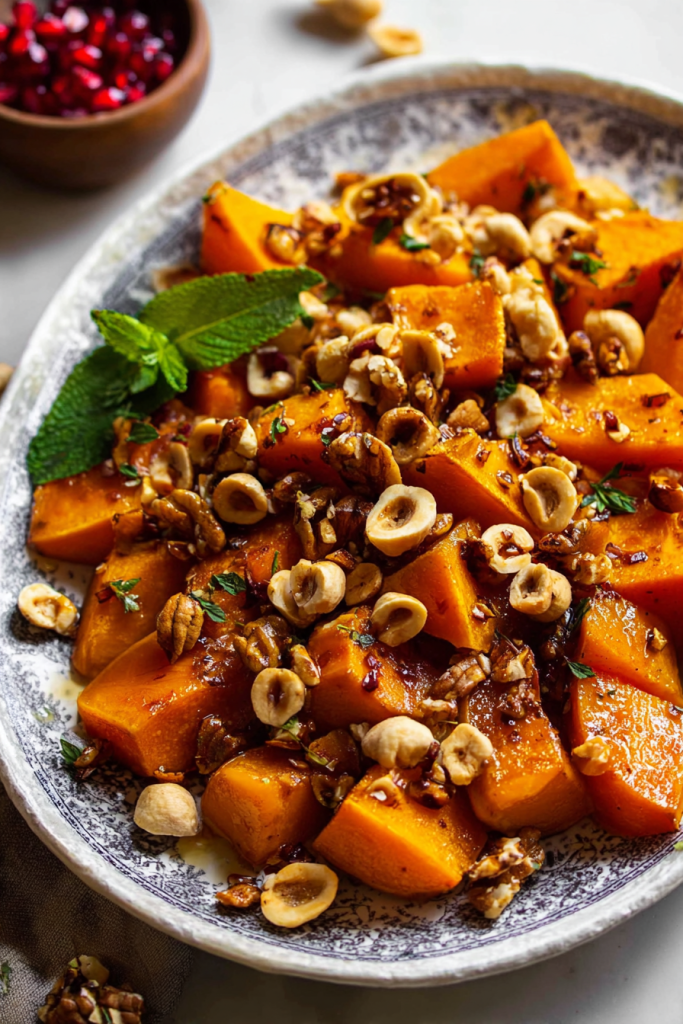
When I first made Roasted Butternut Squash with Brown Butter Hazelnuts, I couldn’t believe something so simple could taste this good.
It starts with basic ingredients. Squash cubes. Olive oil. Salt and pepper.
Then you brown some butter.
And suddenly? You’ve got a side dish that’ll make people think you went to culinary school.
Why This Actually Works
Here’s the thing about butternut squash. When you roast it at high heat, the natural sugars caramelize. It gets sweet. Like, honey-sweet.
But all that sweetness needs balance.
That’s where brown butter saves the day.
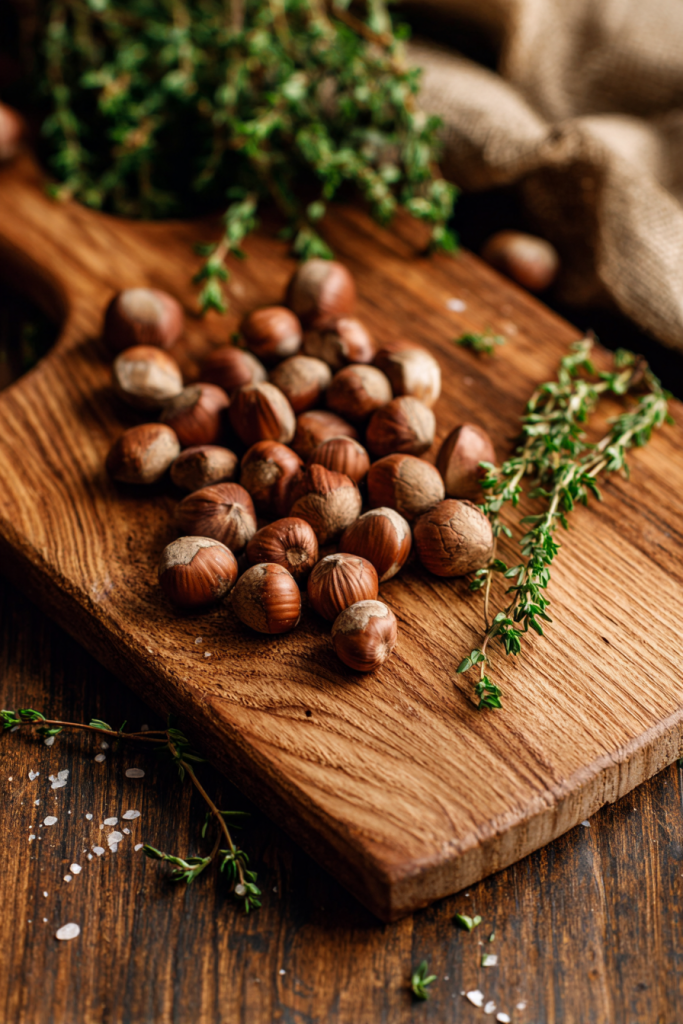
When butter cooks past the melting point, something incredible happens. The milk solids turn golden and develop this nutty, toasted flavor. Your kitchen smells like a fancy restaurant.
Add crunchy hazelnuts? Now you’ve got texture.
Toss in some thyme and garlic? Depth and warmth.
Finish with pomegranate seeds? Bright, tart pops of flavor in every bite.
Each element plays off the others. Sweet meets savory. Soft meets crunchy. Rich meets bright.
It’s not rocket science. It’s just smart cooking.
The Good Stuff Inside
I’m not usually one to preach about health benefits, but this dish actually delivers.
Butternut squash is loaded with vitamin A. We’re talking eye health and immune support in every forkful.
You also get:
- Solid vitamin C (hello, antioxidants)
- B vitamins for energy
- Potassium for your heart
Hazelnuts bring their own game. Heart-healthy fats. Magnesium for blood pressure. Real nutrition that doesn’t taste like you’re eating “healthy food.”
And yeah, there’s butter. But it’s two tablespoons for four servings. You’re fine.
What You Need
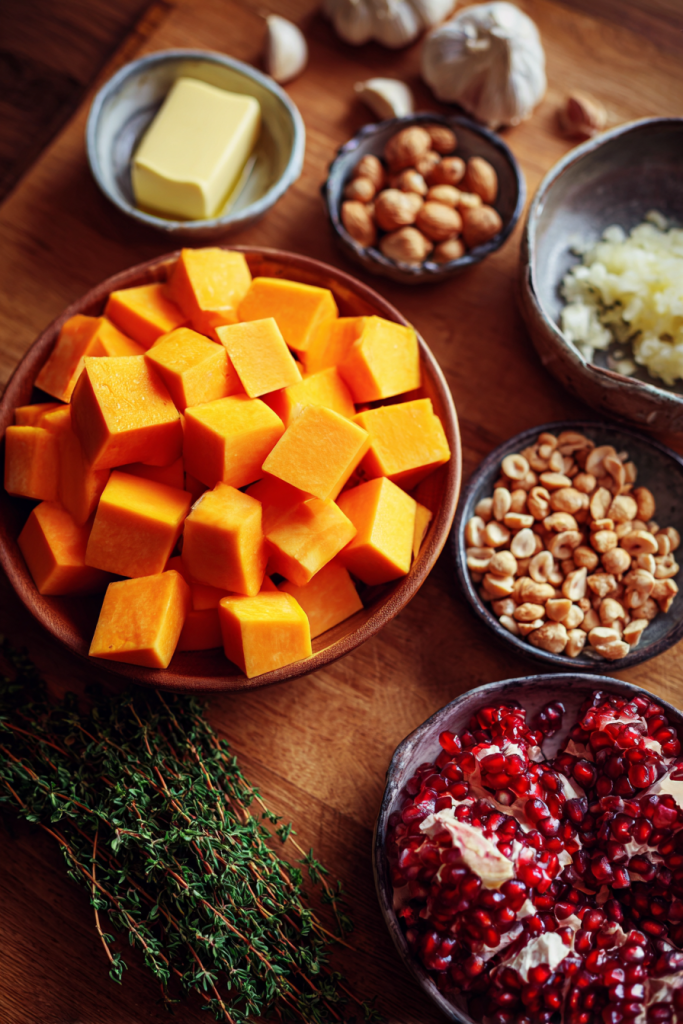
Let me break down what goes into this recipe. Nothing fancy. Nothing you can’t find at a regular grocery store.
Ingredients Table
| Ingredient | Quantity | Notes |
|---|---|---|
| Butternut squash (peeled, cubed) | 5 cups | From 1 medium-large squash |
| Extra-virgin olive oil | 2 Tbsp. | For roasting |
| Kosher salt | 1/2 tsp. | Adjust to taste |
| Black pepper | 1/4 tsp. | Freshly ground preferred |
| Salted butter | 2 Tbsp. | Key for brown butter |
| Garlic clove | 1, minced | Adds savory depth |
| Fresh thyme leaves | 1 tsp. | Woodsy and aromatic |
| Hazelnuts | 1/3 cup | Coarsely chopped |
| Pomegranate arils | 2 Tbsp. | For garnish |
Recipe Timing:
Prep Time: 10 minutes | Cook Time: 15 minutes | Total Time: 25 minutes
Servings: 4 | Difficulty: Easy
Butternut squash is your foundation. Pick one that feels heavy. That means it’s got good moisture and flavor locked inside.
Olive oil helps everything roast evenly. Extra-virgin tastes better, but regular works too.
Salted butter is my pick for browning. The salt amplifies that nutty flavor as it cooks. Got unsalted? Just add a pinch of salt at the end.
Fresh thyme makes a difference. The leaves release oils when heated. Dried thyme works in a pinch, but use half the amount.
Hazelnuts add that satisfying crunch. Don’t have them? Pecans or walnuts work great too.
Pomegranate arils aren’t just pretty. They cut through the richness with tart, fruity brightness. Plus they look gorgeous on the plate.
Mix It Up
This recipe is flexible. Really flexible.
No butternut squash? Use sweet potato. Cut it the same size and follow the same steps.
Nut allergy? Swap in pumpkin seeds. Toast them lightly first.
Different herbs? Try these:
- Rosemary for piney intensity
- Sage for earthy, peppery notes
- Whatever fresh herbs you’ve got
The point is to make this work for you. Don’t stress about having the exact ingredients. Cook with what you have.
Cooking Instructions & Tips
Alright. Time to actually make this thing.
The process is straightforward. But there are a few tricks that make the difference between “pretty good” and “wait, you made this?”
How to Make It
Step 1: Get That Squash Roasting
Crank your oven to 425°F.
High heat is non-negotiable here. Lower temperatures will steam your squash instead of roasting it. You want caramelization, not mush.
Peel your butternut squash. Cut it into 1-inch cubes.
Size matters. I mean it.
If pieces are different sizes, some burn while others stay raw. Keep them uniform.
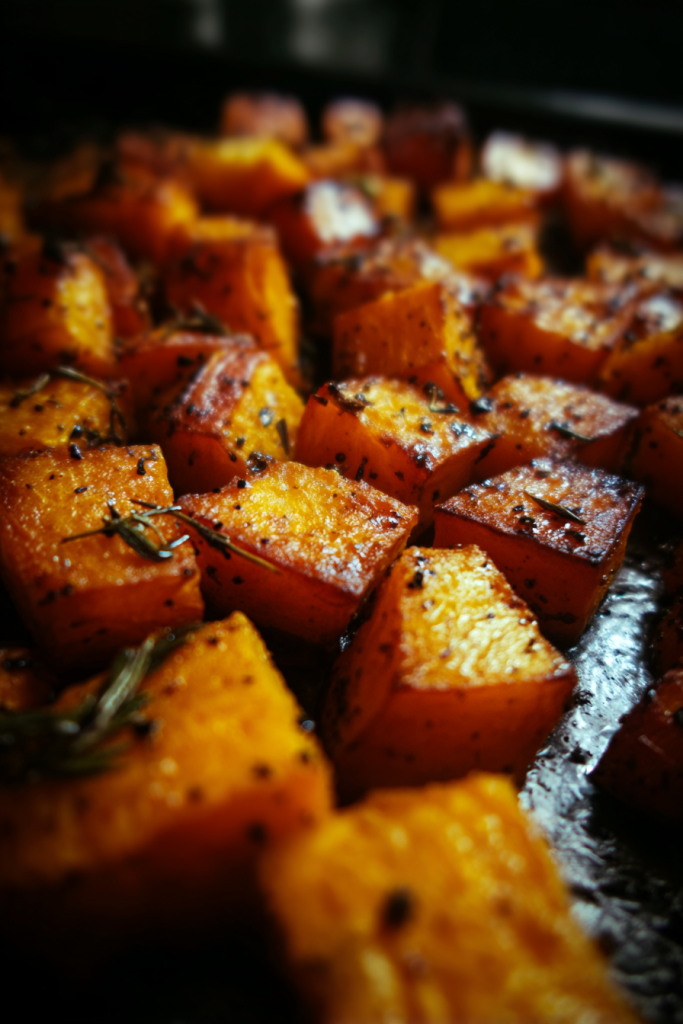
Spread the cubes on a big rimmed baking sheet. Give them space. Crowding = steaming. Space = roasting.
Drizzle olive oil over everything. Sprinkle salt and pepper.
Now get your hands in there. Toss everything until each cube has a light coating.
Pop it in the oven. Set a timer for 20 minutes.
When the timer goes off, pull out the pan and toss the squash around. This ensures even browning. Then back in for another 15 minutes.
Total time: 35 minutes. The cubes should come out tender with golden, caramelized edges.
Step 2: Brown That Butter
Here’s where things get interesting.
During the last 10 minutes of roasting, start your brown butter. This timing keeps everything hot and ready at the same time.
Grab a light-colored skillet. Put it over medium heat. Add your butter.
Why light-colored? Because you need to see the butter change color. Dark pans make this impossible.
Watch the butter melt. It’ll foam up. Keep swirling the pan.
The foam will die down. Keep cooking. Keep swirling.
You’ll see the milk solids settling at the bottom. They’ll turn golden. The butter will smell nutty and toasted.
This takes about 3 minutes.
Do not leave the stove. Brown butter becomes burnt butter fast if you’re not paying attention.
Once it’s golden and smells amazing, add your chopped hazelnuts. Stir them in. They’ll toast slightly and soak up that butter flavor.
Toss in the minced garlic and thyme. Cook for one more minute.
The garlic should smell fragrant but not brown. Thyme releases its oils quickly.
Kill the heat. Right now.
If you used unsalted butter, add a pinch of salt. Taste it. Adjust if needed.
Step 3: Put It Together
Your squash is done. Your brown butter mixture is done.
Transfer the roasted squash to a serving platter. Or a big bowl. Whatever works.
Spoon that gorgeous brown butter hazelnut mixture all over the squash. Make sure every section gets some.
The butter seeps into the tender squash. Creates pockets of flavor.
Scatter pomegranate arils on top. They add color. More importantly, they add those tart pops that balance the richness.
Serve it hot. The contrast between warm squash and cool pomegranate is perfect.
Tips I Learned the Hard Way
Check your oven temperature. Seriously. If it runs cool, your squash won’t caramelize properly. Use a thermometer.
Toss the squash midway. Takes five seconds. Prevents burning. Worth it.
Use medium heat for browning butter. High heat burns it. Low heat takes forever. Medium is the sweet spot.
Fresh herbs beat dried herbs. Every single time. Especially in this recipe where they’re barely cooked.
Cut uniform cubes. I can’t stress this enough. Big pieces take longer. Small pieces burn faster. Keep them similar.
Don’t Do These Things
Overcrowding the pan is the biggest mistake. If pieces are touching too much, they steam. Use two pans if you need to.
Burning the brown butter happens when you multitask. Stay at the stove. Watch the color. Once it’s nutty and golden, you’re done.
Adding garlic too early makes it bitter. Garlic cooks in seconds. Add it at the very end only.
Skipping the pomegranate removes crucial flavor. That tartness balances everything. Don’t skip it.
Using old, sad squash gives you old, sad results. Buy fresh squash that feels firm and heavy.
Serving Suggestions, Storage & FAQ
This dish works for Tuesday night dinner. It works for Thanksgiving. That’s the beauty of it.
What to Serve It With
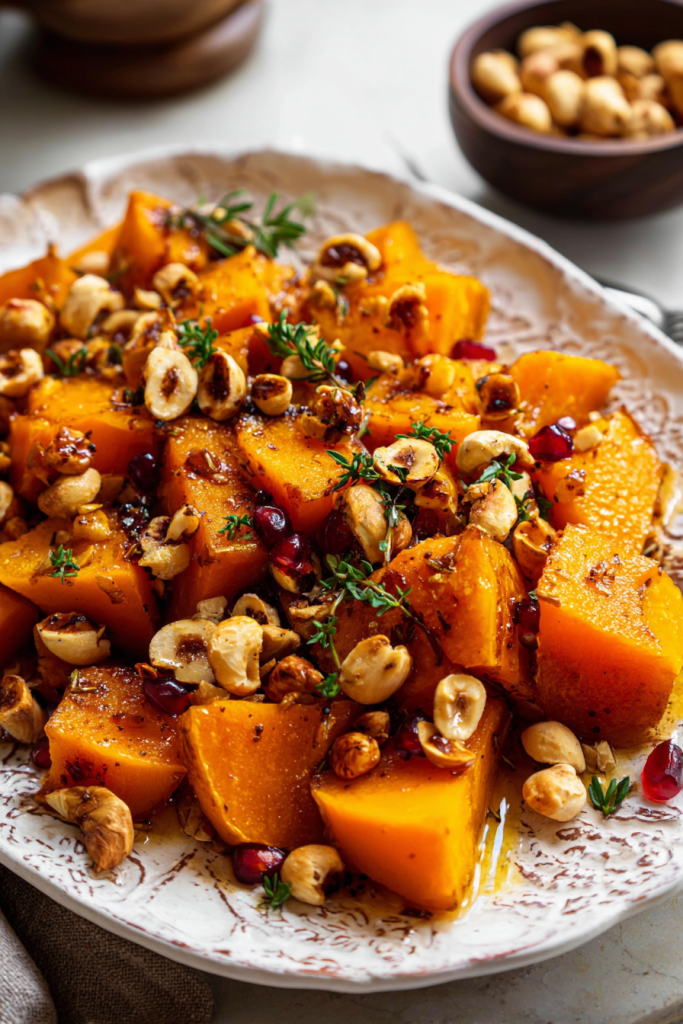
Chicken is an obvious choice. Roasted, grilled, whatever. The sweetness of the squash complements the savory meat beautifully.
Salmon gets interesting with this on the side. The pomegranate cuts through the fattiness of the fish. Try it with citrus-herb salmon.
Red meat stands up to the bold flavors. Beef, lamb, even venison. The brown butter adds richness that matches heartier proteins.
Turkey at Thanksgiving? Obviously. The colors alone make your table pop. Plus it tastes incredible with traditional holiday foods.
Vegetarian mains benefit from this substantial side. Pair it with:
- Grain bowls
- Lentil dishes
- Chickpea preparations
The hazelnuts add protein. The squash adds heft. It’s satisfying even without meat.
Planning Ahead
Want to save time? Cut your squash the day before. Store the cubes in an airtight container in the fridge.
This prep work is a lifesaver on busy cooking days.
Just let the cubes warm up to room temperature before roasting. Cold squash takes longer to cook.
Storing Leftovers
Got extras? Lucky you.
Cool the squash completely. Transfer to an airtight container. It’ll keep in the fridge for 4 to 5 days.
The brown butter solidifies when cold. That’s normal. Doesn’t affect taste at all. Actually, the flavors get better as they hang out together.
How to Reheat
Stovetop method (my favorite): Put squash in a skillet over medium-low heat. Stir gently. Heat until warm.
Oven method: Spread squash in a baking dish. Cover it. Heat at 350°F for about 10 minutes.
Microwave method: Use 50% power. Heat in short bursts. Stir between each burst.
The stovetop gives you the best texture. But honestly? All three methods work fine.
Questions People Always Ask
Can I use different squash?
Yep. Acorn squash works. Delicata squash works. Sweet potatoes work great too.
Cut them the same size. Follow the same method. Done.
No pomegranate arils?
Try these instead:
- Dried cranberries (soak them in warm water first)
- Fresh cranberries cooked with sugar
- Diced apple for crunch and sweetness
How do I know the butter is actually browned?
Three signs:
- The foam goes away
- The color turns golden brown
- It smells nutty and toasted
All three need to happen. When they do, pull it off the heat immediately.
Can I make this vegan?
Plant-based butter doesn’t brown like dairy butter. But you can still melt it for richness.
Another option? Use olive oil with nutritional yeast. It gives you those nutty, savory notes that mimic brown butter somewhat.
Why is my squash mushy?
Two reasons:
- Overcrowded pan (pieces steamed instead of roasted)
- Overcooked (check at 35 minutes, don’t go longer)
Do I really need to peel it?
Yeah. The skin gets tough and chewy when roasted. Not pleasant to eat.
Use a sharp vegetable peeler. Makes the job easier.
My Final Take
This recipe proves you don’t need complicated techniques to make impressive food.
Brown butter? Easy once you try it.
Roasted squash? Literally just toss and forget.
The result looks like you spent hours. Reality? About 25 minutes of actual work.
I make this for weeknight dinners. I make it for holiday gatherings. Works both ways.
The nutritional benefits are real. You’re eating vegetables, nuts, and minimal fat. But it tastes indulgent. That’s the kind of cooking I can get behind.
Try different nuts. Experiment with herbs. Make it yours.
Once you nail the brown butter technique, you’ll use it everywhere. Pasta. Vegetables. Even cookies.
It’s a game-changer. And this recipe is the perfect place to learn it.
Make this dish. Serve it hot. Watch people go back for seconds.
Simple food, done right, never disappoints.
Nutrition Information (per serving, approximate):
| Nutrient | Amount | % Daily Value |
|---|---|---|
| Calories | 220 | – |
| Total Fat | 15g | 19% |
| Saturated Fat | 4g | 20% |
| Carbohydrates | 22g | 7% |
| Fiber | 4g | 14% |
| Protein | 3g | 6% |
| Vitamin A | – | 450% |
| Vitamin C | – | 40% |
These are estimated values and can vary by up to 10% depending on your exact ingredients.
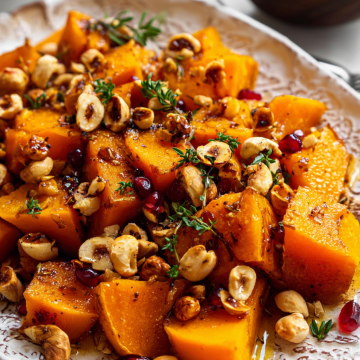
Roasted Butternut Squash with Brown Butter Hazelnuts
Instructions
- Roast the Squash:
- Preheat oven to 425°F. Spread butternut squash cubes on a large rimmed baking sheet in a single layer. Drizzle with olive oil and sprinkle with salt and pepper. Toss to coat evenly. Roast for 20 minutes, toss the squash, then roast for another 15 minutes until tender with golden, caramelized edges.
- Brown the Butter:
- During the last 10 minutes of roasting, melt butter in a light-colored skillet over medium heat. Swirl the pan frequently as the butter foams and the milk solids turn golden brown, about 3 minutes. Watch carefully to prevent burning. Add chopped hazelnuts and stir to toast slightly. Add minced garlic and thyme, cooking for 1 more minute until fragrant. Remove from heat immediately.
- Assemble and Serve:
- Transfer roasted squash to a serving platter. Spoon the brown butter hazelnut mixture over the squash, ensuring even distribution. Scatter pomegranate arils on top. Serve hot.
Notes
Nut Alternatives: Use pecans, walnuts, or pumpkin seeds (lightly toasted) if hazelnuts aren’t available or for nut allergies.
Herb Variations: Substitute fresh rosemary or sage for thyme. Use half the amount if using dried herbs.
Pomegranate Replacements: Try dried cranberries (soaked in warm water), fresh cranberries cooked with sugar, or diced apple.
Brown Butter Tips: Use a light-colored skillet to monitor the color change. The butter should smell nutty and turn golden brown. Don’t walk away—it can burn quickly. If using unsalted butter, add a pinch of salt at the end.
Make Ahead: Cut squash cubes up to 1 day ahead and store in an airtight container in the fridge. Let come to room temperature before roasting.
Storage: Store leftovers in an airtight container in the refrigerator for 4-5 days. Reheat in a skillet over medium-low heat, in the oven at 350°F covered for 10 minutes, or in the microwave at 50% power.
Vegan Option: Plant-based butter doesn’t brown like dairy butter, but can be melted for richness. Alternatively, use olive oil with nutritional yeast for nutty, savory notes.