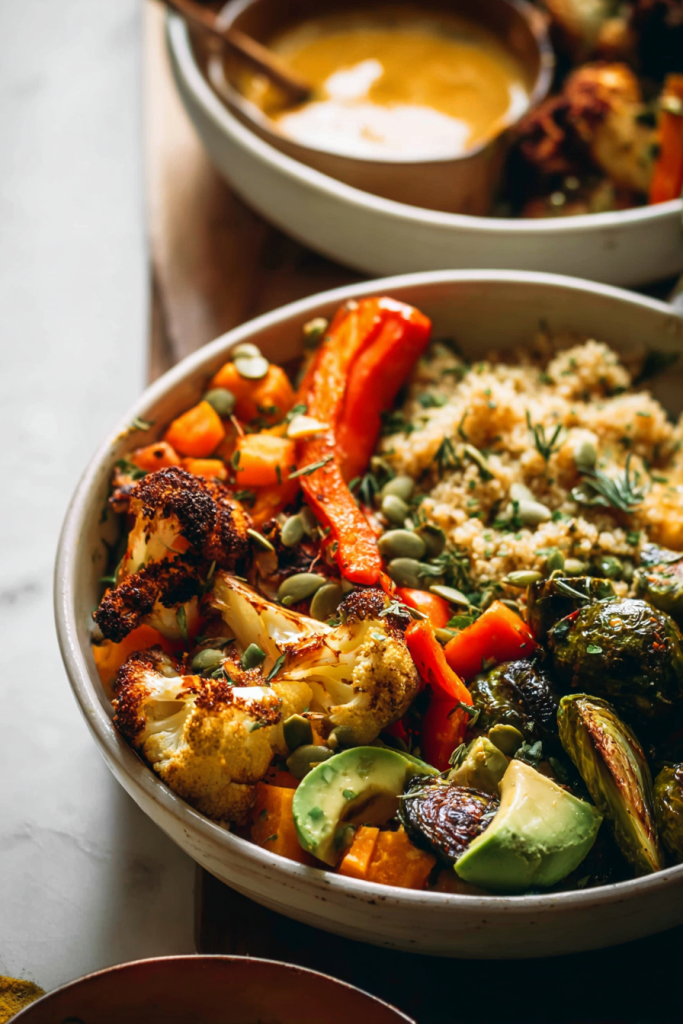
Roasted Veggie Glow Bowls are packed with golden cauliflower, tender carrots, fluffy quinoa, and a vibrant tahini dressing that’ll make you want seconds. These bowls taste incredible and actually make you feel good after eating them.
Why I Can’t Stop Making These Bowls
Okay, confession time.
I’ve made these veggie bowls at least twice a week for the past month. They’re that good.
They hit differently than other lunches. You know that heavy, sluggish feeling you get after eating? Yeah, that doesn’t happen here. Instead, you get this satisfied-but-energized vibe that carries you through the afternoon.
Here’s what I love most:
- The roasted veggies get these crispy, caramelized edges
- The quinoa base is fluffy and filling
- Everything just… works together
The spice blend creates this warm depth without screaming “SPICES!” in your face. And when you mix in the kale while the quinoa’s still hot? It wilts down perfectly. Add creamy avocado on top and you’ve got texture heaven.
That Golden Tahini Dressing Though
Can we talk about this dressing for a second?
It’s life-changing.
I’m not exaggerating. It’s nutty from the tahini, bright from the vinegar, slightly sweet, and has these aromatic spices that just… chef’s kiss.
I always make a double batch now. Because once you taste it, you’ll want to put it on everything. Leftover chicken? Drizzle it. Random grains in your fridge? Toss them in this sauce. Roasted veggies from yesterday? You already know.
Perfect for Meal Prep (Trust Me on This)
Sunday meal prep has become so much easier since I discovered these bowls.
I cook everything, store the components separately, and boom—grab-and-go lunches for the entire week. The quinoa stays fluffy. The veggies keep their texture. The dressing stays fresh for days.
When lunchtime hits, I just reheat the grains and veggies, pile everything into a bowl, and add the cold dressing with fresh garnishes.
Takes maybe 3 minutes to assemble.
The cooking part? Pretty beginner-friendly. You’ll chop some vegetables (can’t avoid that with veggie-heavy meals, sorry). But after that? The oven does the hard work while you prep the other stuff.
I’ve served these to guests too. They always look impressed. Little do they know how simple it actually is.
Breaking Down the Ingredients
Let me walk you through what makes these bowls work.
Cauliflower: You need one medium head—gives you about 6 cups of florets. Now, I know some people aren’t cauliflower fans. But here’s the thing: roasting it with spices completely transforms it. We’re talking crispy edges, sweet caramelized bits, and this addictive flavor that converts even the haters.
Carrots: I use 3 large ones. Their natural sweetness balances out the warm spices beautifully. Cut them diagonally into 1-inch chunks—not just because it looks pretty (though it does), but because that diagonal cut gives you more surface area. More surface area = more caramelization = more flavor.
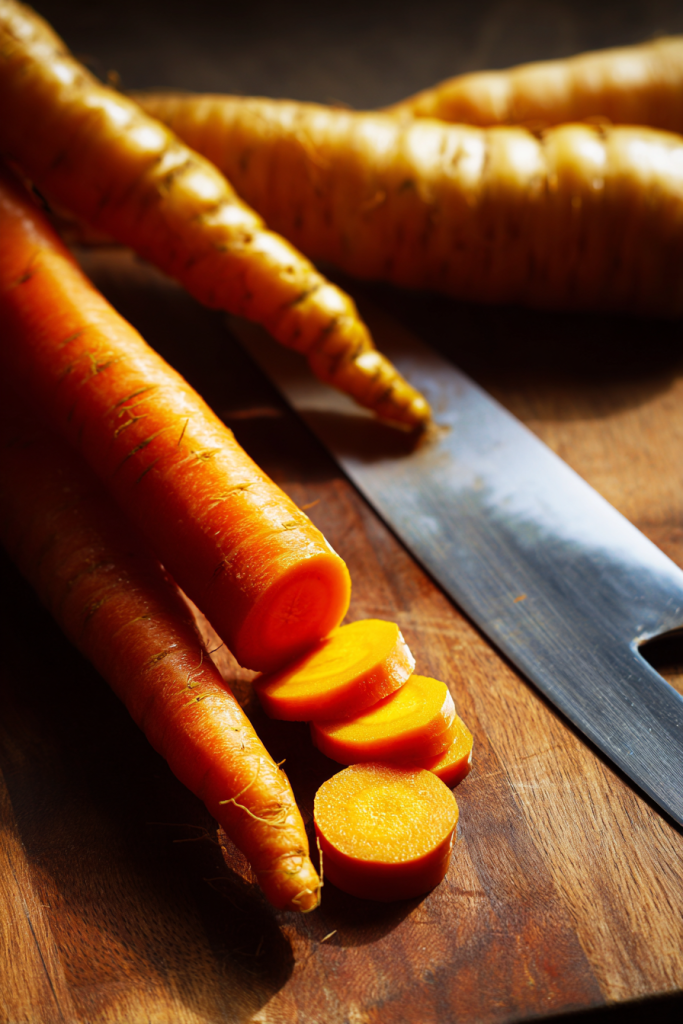
Quinoa: This little grain is a protein powerhouse. One cup of dry quinoa expands like crazy when you cook it in vegetable broth. And yeah, use broth instead of water. It makes a huge difference in flavor. The quinoa comes out fluffy and nutty instead of bland and boring.
Kale: Four packed cups sounds like a mountain of kale, right? Don’t worry. It shrinks down significantly when you stir it into hot quinoa. Plus, kale is loaded with vitamins A, C, and K. It adds this vibrant green color and subtle earthy flavor that rounds everything out.
Pumpkin Seeds: Also called pepitas. These crunchy little guys are one of the most protein-rich seeds you can buy. They’re packed with magnesium too. Just a quarter cup scattered over four bowls adds this satisfying crunch to every bite.
Avocado: One ripe avocado (sliced thin) brings that creamy richness we all crave. It balances the warm spices and adds heart-healthy fats. Pro tip: choose avocados that give slightly when you press them gently. That’s perfect ripeness.
Olive Oil: You’ll use 3 tablespoons total—split between roasting and finishing. Get the good extra-virgin stuff. It helps the vegetables caramelize and adds this fruity flavor. That last tablespoon stirred into quinoa? Makes it silky and prevents sticking.
Spice Blend: Smoked paprika, garlic powder, and cumin. This trio creates layers of flavor. The smoked paprika adds depth without heat. Garlic powder brings savory notes. Cumin adds that earthy warmth that makes the veggies sing.
Golden Tahini Dressing: This is where the magic happens.
Start with well-stirred tahini (it separates in the jar, so mix it up first). Sherry vinegar adds brightness—though apple cider vinegar works just as well. Maple syrup gives gentle sweetness that balances the tang.
Chili garlic sauce brings subtle heat and complexity. Curry powder and turmeric? That’s what gives the dressing its gorgeous golden color and warm spice notes.
Start with the salt amount listed, then taste. Some tahini brands are saltier than others, so adjust as needed.
Ingredients Table
| Ingredient | Quantity | Notes |
|---|---|---|
| Cauliflower florets | 6 cups | From 1 medium head |
| Large carrots | 3 | Peeled, diagonal-cut |
| Extra-virgin olive oil | 3 Tbsp. | Divided use |
| Smoked paprika | 1 tsp. | Adds smoky depth |
| Garlic powder | 1 tsp. | Savory foundation |
| Ground cumin | 1/2 tsp. | Earthy warmth |
| Kosher salt | 1/2 tsp. | For vegetables |
| Black pepper | 1/4 tsp. | Freshly ground best |
| Dry quinoa | 1 cup | Rinse before cooking |
| Vegetable broth | 2 cups | Low-sodium preferred |
| Chopped kale | 4 cups packed | Stems removed |
| Roasted pumpkin seeds | 1/4 cup | Also called pepitas |
| Ripe avocado | 1 | Sliced before serving |
| Fresh parsley | For garnish | Chopped |
| Dressing: | ||
| Tahini | 1/4 cup | Well-stirred |
| Sherry vinegar | 1 Tbsp. | Or apple cider vinegar |
| Maple syrup | 1 Tbsp. | Pure preferred |
| Chili garlic sauce | 2 tsp. | Adjust for heat |
| Curry powder | 1/2 tsp. | Mild or medium |
| Ground turmeric | 1/4 tsp. | Golden color |
| Kosher salt | 1/4 tsp. | Or to taste |
Recipe Timing:
Prep Time: 10 minutes | Cook Time: 25 minutes | Total Time: 35 minutes
Servings: 4 | Difficulty: Easy
What If You Don’t Have Everything?
No carrots? No problem.
Grab a sweet potato instead. Peel it, cube it, and toss it in with the cauliflower. It roasts at the same temperature and brings this natural sweetness that’s absolutely delicious. Just keep the pieces similar in size so everything cooks evenly.
Not a kale person?
Swap it for baby spinach, Swiss chard, or arugula. The heartier greens (like chard) should go into the hot quinoa. Delicate ones (like arugula) can be added raw right before serving.
The dressing is flexible too. Don’t have sherry vinegar? Use rice vinegar, red vinegar, or even fresh lemon juice. They all bring that necessary acidity. Start with one tablespoon and taste as you go.
SEGMENT 2: COOKING INSTRUCTIONS
Let’s Get Cooking
Step 1: Get Those Veggies Ready
First thing: preheat your oven to 425°F.
This high heat is crucial. It’s what gives you those crispy edges and proper caramelization. While the oven heats up, prep your vegetables.
Cut the cauliflower into florets—roughly 2 inches each. Try to keep them similar in size. This ensures everything cooks evenly instead of having some pieces burnt while others are still raw.
Peel your carrots and slice them diagonally into 1-inch chunks. That diagonal cut? It creates these attractive pieces with maximum surface area for browning.
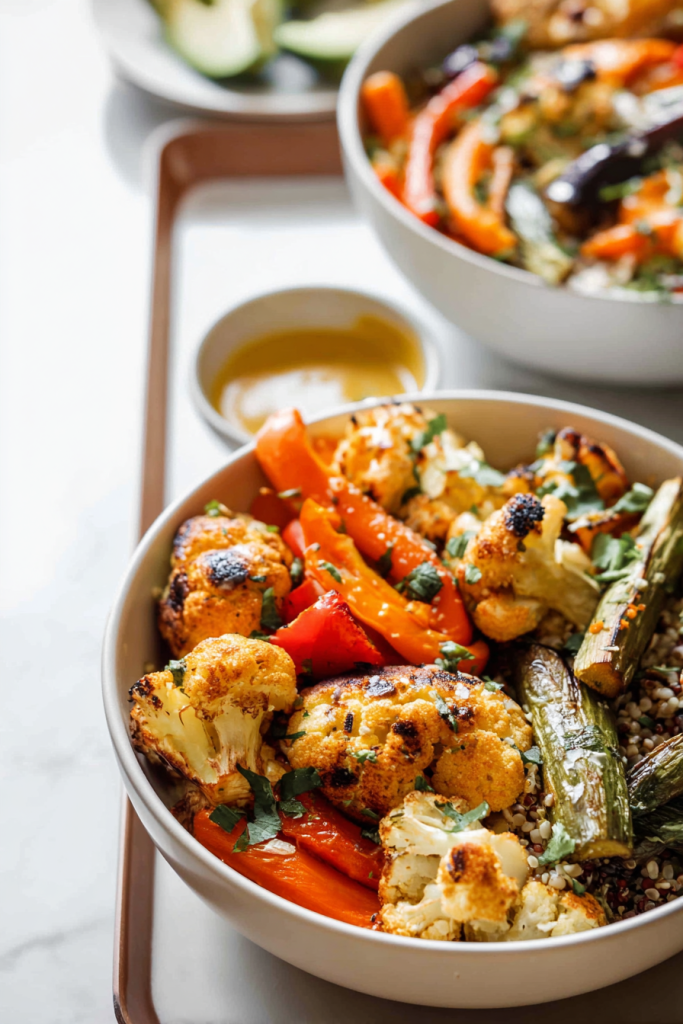
Toss cauliflower and carrots onto a large rimmed baking sheet. Drizzle with 2 tablespoons of olive oil. Add your smoked paprika, garlic powder, cumin, salt, and black pepper right on top.
Now get your hands dirty.
Toss everything thoroughly with your hands (or use two big spoons if you prefer). Make sure every single piece gets coated with oil and spices. Then spread them out in a single layer.
Important: Don’t crowd them.
Crowded vegetables steam instead of roast. You want roasting. Steaming gives you soft, sad vegetables. Roasting gives you crispy, caramelized, happy vegetables.
Slide that baking sheet into your preheated oven. Set a timer for 25 minutes. You’ll need to toss them halfway through.
Step 2: Time to Cook the Quinoa
While your veggies roast, let’s tackle the quinoa.
Combine 1 cup quinoa with 2 cups vegetable broth in a medium saucepan. Put it over medium-high heat and bring it to a rolling boil.
Once it’s boiling, reduce the heat to low. Cover with a tight-fitting lid.
Here’s the key: let it simmer for 15 minutes without peeking.
I know you want to check on it. Don’t. That lid traps steam that cooks the quinoa perfectly. Every time you lift it, you release that precious steam.
After 15 minutes, check if the liquid’s absorbed. The quinoa should look fluffy with those little spiral tails visible.
Take it off the heat and stir in your chopped kale. Add that remaining tablespoon of olive oil too.
The residual heat wilts the kale beautifully while the oil adds richness. Cover it again and let it sit until you’re ready to assemble.
Step 3: Whip Up That Golden Dressing
Grab a medium mixing bowl.
Add your tahini first. Make sure it’s well-stirred beforehand—tahini separates in the jar like crazy. Mix it up before measuring for a smooth texture.
Toss in the sherry vinegar, maple syrup, and chili garlic sauce. Add curry powder, turmeric, and salt. Whisk everything together.
It’ll look super thick at first. That’s normal.
Start whisking in water, one tablespoon at a time. Keep adding until the dressing reaches a pourable consistency. I usually use 3 to 4 tablespoons total, but it depends on your tahini.
The dressing should coat the back of a spoon but still drizzle easily.
Taste it. Adjust the seasoning if needed. Some tahini brands are way saltier than others, so trust your taste buds here.
Step 4: Check Those Veggies
Around the 12-minute mark, pull that baking sheet out.
Use a spatula to toss the vegetables around. This ensures everything gets evenly exposed to heat. Pop them back in to finish roasting.
They’re done when the edges turn golden brown and crispy. Your carrots should pierce easily with a fork but still have some structure. The cauliflower should have these gorgeous caramelized spots all over.
Total roasting time is usually 25 to 30 minutes. Every oven’s different though. Some run hotter. Watch them during the final minutes—you want caramelization, not charcoal.
Step 5: Put It All Together
Grab four serving bowls.
Divide your quinoa-kale mixture evenly among them. I use a big spoon to create a fluffy base in each bowl.
Pile those roasted vegetables on top of the quinoa. Distribute them evenly so everyone gets both cauliflower and carrots. Let those colorful veggies sit prominently on top—they’re the stars here.
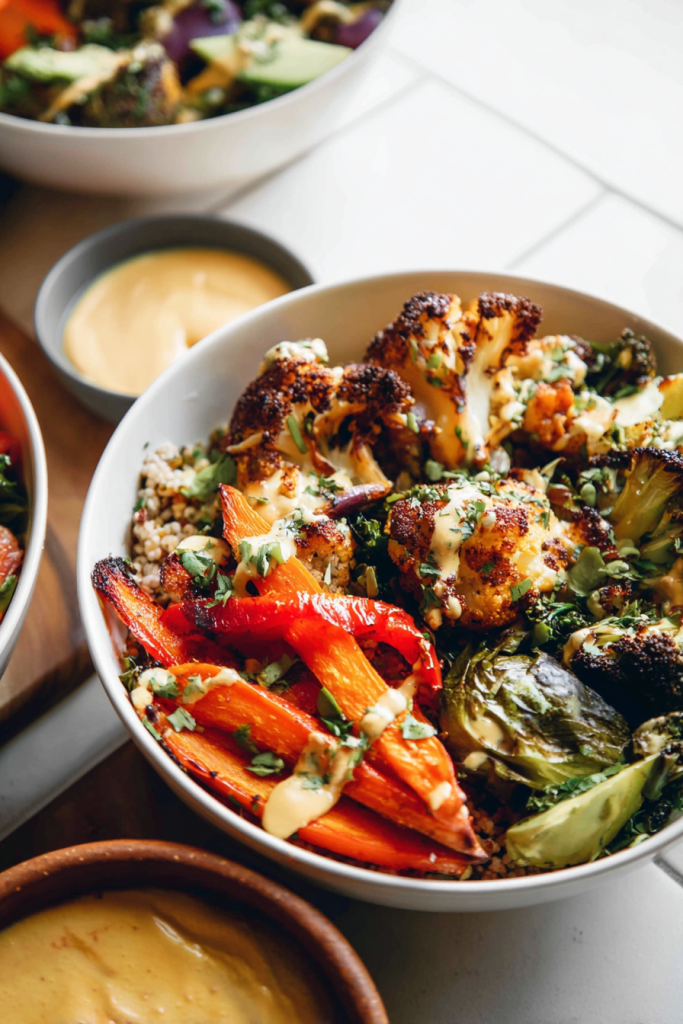
Slice your avocado. Divide it among the four bowls. You can fan the slices out all pretty-like, or just arrange them however. The creamy avocado creates this beautiful visual and textural contrast.
Drizzle each bowl with that golden tahini dressing. Use about 2 tablespoons per bowl—though honestly, some people prefer more. Go wild.
Sprinkle 1 tablespoon of pumpkin seeds over each bowl. That crunch factor is crucial.
Finish with a generous sprinkle of chopped fresh parsley. Those bright green herbs add freshness and make everything look Instagram-worthy.
Serve immediately while the vegetables are still warm.
Quick Tips That Make a Difference
Always fully preheat your oven before roasting. A properly heated oven means immediate caramelization when those veggies hit the pan. Better flavor, better texture.
Don’t skip the halfway toss.
Seriously. This one simple step prevents burning and ensures even browning. Set a timer for it so you don’t forget. I’ve forgotten before. It’s not pretty.
If your tahini dressing gets too thick after sitting around, just whisk in more water. Add it one teaspoon at a time so you don’t accidentally make it too runny. The dressing naturally thickens as it sits, especially when refrigerated.
Rinse your quinoa before cooking if the package says to. Some quinoa has a natural coating that tastes bitter. A quick rinse removes it. Takes 30 seconds and makes a noticeable difference.
SEGMENT 3: VARIATIONS, STORAGE & FAQ
Ways to Switch It Up
Want More Protein? Add baked tofu cubes. Cut firm tofu into 1-inch cubes, toss with olive oil and seasonings, then bake on a separate sheet. After 25 minutes at 425°F, you’ll have golden, crispy tofu perfection.
Chickpea Lover? Roasted chickpeas add satisfying crunch plus plant protein. Use a separate baking sheet (they need space to crisp up properly). Drain and pat canned chickpeas super dry before tossing with oil and spices. Moisture is the enemy of crispiness.
Sweet Potato Swap: Replace the carrots with cubed sweet potato for a different kind of sweetness. Peel and cube one large sweet potato into 1-inch pieces. Roasting time stays the same—25 to 30 minutes.
Different Grains? Try brown rice, farro, or couscous instead of quinoa. Each grain brings its own unique texture and flavor. Just adjust cooking times based on the package directions.
Spice It Differently: Experiment with other spice combinations. Za’atar? Incredible. Ras el hanout? Amazing. Italian seasoning? Surprisingly good. Each blend creates a completely different flavor profile using the same base ingredients.
Seasonal Swap: Use whatever vegetables are in season. Brussels sprouts in fall? Perfect. Butternut squash in winter? Delicious. Zucchini in summer? Absolutely. Just keep the pieces similar in size for even cooking.
How to Store Everything (and Keep It Fresh)
Make-Ahead Strategy:
Chop your vegetables up to 3 days ahead. Store them in airtight containers in the fridge. Keep cauliflower and carrots separate from other ingredients to maintain freshness.
This saves serious time on busy cooking days. Sunday prep = easy weekday meals.
You can also make the golden tahini dressing up to 4 days in advance. Store it in a sealed container in the refrigerator. Bring it to room temperature before serving—makes drizzling easier.
Storing Leftovers:
Here’s the key: store leftover quinoa and roasted vegetables separately from the dressing.
Why?
Hot components mess with the delicate fats in tahini. Keep them apart using separate airtight containers.
The cooked quinoa and roasted veggies last up to 4 days refrigerated. The tahini dressing? It stays fresh up to 10 days in the fridge.
Always store avocado and fresh parsley separately. Add them fresh when you’re ready to eat.
Reheating Instructions:
Transfer quinoa and vegetables to a microwave-safe bowl. Heat in 30-second intervals, stirring between each one. This prevents hot spots and ensures everything heats evenly.
Or use a skillet method: reheat over medium heat with a splash of water. Stir frequently until warmed through. This works especially well for keeping texture intact.
The tahini dressing usually needs a little adjustment after sitting in the fridge. Whisk in 1 to 2 teaspoons of water to restore that pourable consistency.
Don’t heat the dressing. Serve it cold or at room temperature.
Your Questions Answered
Can I make these bowls ahead for meal prep?
Yes! These bowls are perfect for meal prep.
Here’s what I do:
Prepare all components on Sunday. Store them separately—quinoa-kale mixture in one container, roasted vegetables in another, dressing in a third.
When I’m ready to eat, I reheat the quinoa and veggies. Then I add fresh avocado, pumpkin seeds, and parsley right before eating.
This method keeps everything fresh and maintains optimal textures throughout the week. Nothing gets soggy. Nothing gets weird.
What if I don’t have sherry vinegar?
Apple cider vinegar works great. Similar acidity level, slightly different flavor profile but totally delicious.
Rice vinegar also works beautifully in this dressing. Fresh lemon juice provides brighter, more citrusy notes (which I actually love).
Start with 1 tablespoon of whatever substitute you’re using. Taste and adjust from there.
How do I prevent my quinoa from becoming mushy?
Use the correct quinoa-to-liquid ratio: 1 to 2.
Don’t peek while it simmers. Every time you lift that lid, you release steam. That steam is cooking your quinoa.
After cooking, let quinoa rest covered for 5 minutes. Then fluff it with a fork before serving. This separates the grains and prevents clumping.
Can I roast the vegetables at a lower temperature?
You can, but you won’t get the same results.
Lower temperatures won’t give you that caramelization we’re after. The high heat of 425°F creates crispy edges and deep flavor.
If you absolutely must use lower temperature, expect longer cooking times and less browning. Your vegetables will be tender but won’t have that delicious caramelized exterior.
Is the chili garlic sauce necessary in the dressing?
It adds depth and subtle heat, but you can skip it if you want milder dressing.
Replace it with an extra teaspoon of maple syrup to maintain balance. Or use sriracha or your favorite hot sauce for different heat levels.
The dressing is still delicious without it—just slightly less complex.
Final Thoughts
These Roasted Veggie Glow Bowls deliver exactly what the name promises.
Vibrant nutrition that makes you feel amazing. Real talk: they satisfy hunger while giving you sustained energy throughout your afternoon. The combination of protein, fiber, and healthy fats keeps you full for hours.
Serve them as a complete meal. Nothing else needed. They work equally well for lunch or dinner. Pack them for work or enjoy them fresh from the oven at home.
Feeding a crowd?
Double the recipe. Everything scales easily (though you might need two baking sheets for the vegetables). The presentation is impressive enough for casual entertaining.
That golden tahini dressing? Keep extra on hand. It transforms simple meals throughout your week. Leftover grains? Toss with dressing. Roasted chicken? Drizzle it on top. Steamed vegetables? You get the idea.
Experiment with different vegetables and grains to keep things interesting. The basic method works with countless combinations. Let seasonal produce and your personal preferences guide you.
These bowls prove healthy eating doesn’t mean bland, boring, or unsatisfying.
Every component matters. From the crispy vegetables to the creamy dressing, each element plays its role.
Make these bowls part of your regular rotation. They’re simple enough for weeknight cooking yet special enough for weekend meals.
Your body gets the nourishment. Your taste buds get the flavor.
Everybody wins.
Roasted Veggie Glow Bowls
Ingredients
- For the Roasted Vegetables:
- 6 cups cauliflower florets from 1 medium head
- 3 large carrots peeled, cut diagonally into 1-inch chunks
- 2 tablespoons extra-virgin olive oil
- 1 teaspoon smoked paprika
- 1 teaspoon garlic powder
- 1/2 teaspoon ground cumin
- 1/2 teaspoon kosher salt
- 1/4 teaspoon black pepper freshly ground
- For the Quinoa Base:
- 1 cup dry quinoa rinsed
- 2 cups vegetable broth low-sodium preferred
- 4 cups chopped kale packed, stems removed
- 1 tablespoon extra-virgin olive oil
- For the Golden Tahini Dressing:
- 1/4 cup tahini well-stirred
- 1 tablespoon sherry vinegar or apple cider vinegar
- 1 tablespoon maple syrup pure preferred
- 2 teaspoons chili garlic sauce
- 1/2 teaspoon curry powder mild or medium
- 1/4 teaspoon ground turmeric
- 1/4 teaspoon kosher salt or to taste
- 3-4 tablespoons water for thinning
- For Topping:
- 1/4 cup roasted pumpkin seeds pepitas
- 1 ripe avocado sliced
- Fresh parsley chopped, for garnish
Instructions
- Roast the Vegetables:
- Preheat oven to 425°F.
- Place cauliflower florets and carrot chunks on a large rimmed baking sheet.
- Drizzle with 2 tablespoons olive oil and add smoked paprika, garlic powder, cumin, salt, and black pepper.
- Toss thoroughly with hands to coat evenly, then spread in a single layer.
- Roast for 25-30 minutes, tossing halfway through, until vegetables are golden brown and caramelized.
- Cook the Quinoa:
- While vegetables roast, combine quinoa and vegetable broth in a medium saucepan over medium-high heat.
- Bring to a boil, then reduce heat to low and cover with a tight-fitting lid.
- Simmer for 15 minutes without lifting the lid.
- Remove from heat and stir in chopped kale and remaining 1 tablespoon olive oil.
- Cover and let sit until ready to assemble.
- Make the Golden Tahini Dressing:
- In a medium bowl, whisk together tahini, sherry vinegar, maple syrup, chili garlic sauce, curry powder, turmeric, and salt.
- Add water 1 tablespoon at a time, whisking until dressing reaches a pourable consistency (3-4 tablespoons total).
- Taste and adjust seasoning as needed.
- Assemble the Bowls:
- Divide quinoa-kale mixture evenly among 4 serving bowls.
- Top each bowl with roasted vegetables.
- Add sliced avocado to each bowl.
- Drizzle each bowl with 2 tablespoons golden tahini dressing.
- Sprinkle with 1 tablespoon pumpkin seeds per bowl.
- Garnish with fresh chopped parsley.
- Serve immediately while vegetables are warm.
Notes
Kale can be swapped for baby spinach, Swiss chard, or arugula
Sherry vinegar can be replaced with apple cider vinegar, rice vinegar, or fresh lemon juice Storage: Store quinoa, roasted vegetables, and dressing separately in airtight containers
Quinoa and vegetables last up to 4 days refrigerated
Dressing lasts up to 10 days refrigerated
Add avocado and parsley fresh when serving Reheating: Microwave quinoa and vegetables in 30-second intervals, stirring between each
Or reheat in a skillet over medium heat with a splash of water
Serve dressing cold or at room temperature (do not heat) Meal Prep Tip: Prep vegetables up to 3 days ahead and store in airtight containers
Make dressing up to 4 days in advance
Assemble bowls fresh for best texture For More Protein: Add baked tofu cubes or roasted chickpeas
Claude is AI and can make mistakes. Please double-check responses.