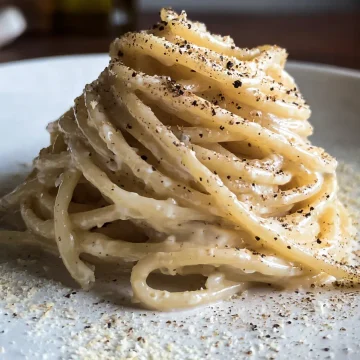
Cacio e Pepe
Equipment
- Wide skillet or sauté pan 12 inches, wide enough to toss in
- Box grater or rasp grater the fine side
- Tongs
- Pepper mill or mortar and pestle for coarse grinding
Ingredients
- 12 ounces spaghetti, tonnarelli or bucatini about 340 g, a bronze-cut brand if you can
- 6 ounces Pecorino Romano about 170 g, grated as finely as you can manage
- 2 teaspoons whole black peppercorns coarsely ground just before cooking
- 2 teaspoons kosher salt for the pasta water only, and go light
Instructions
Set Up
- Grate the Pecorino as finely as you possibly can, using the small holes of a box grater or a rasp. Coarse shreds will not dissolve, and every lump in a bad cacio e pepe started life as a shred that was too big. Set it aside in a wide bowl.
- Boil the pasta in about half the water you would normally use — roughly 2 quarts for 12 ounces. Less water means more concentrated starch, and starch is what holds this sauce together. Salt it lightly; the Pecorino brings a great deal of salt on its own.
Bloom the Pepper
- Coarsely grind the peppercorns and tip them into a dry, wide skillet over medium heat. Toast for 1 to 2 minutes, shaking the pan, until they smell sharp and floral. Pre-ground pepper cannot do this.
- Add a ladleful of the pasta water to the pepper and let it bubble for a few seconds. Take the skillet off the heat and leave it there.
Make the Pecorino Cream
- Add hot pasta water to the grated Pecorino a tablespoon at a time, stirring hard after each addition. You are aiming for a thick, smooth paste about the consistency of ricotta — roughly 1/3 cup of water in total. Add it all at once and you get thin, watery cheese soup that will never come together.
Finish the Pasta
- Drain the pasta 2 minutes before the packet says al dente, reserving at least 2 cups of the water. Transfer the pasta straight into the pepper skillet with tongs.
- Return the skillet to medium heat and toss for about 2 minutes, adding pasta water a splash at a time, until the pasta finishes cooking and the liquid around it turns glossy and slightly syrupy. This is the step that builds the body of the sauce.
- Take the pan off the heat completely and count to ten. This is the whole recipe. Cheese added to a pan that is still hot will seize into stringy lumps — residual heat is more than enough to melt it.
- Add the Pecorino cream and toss hard and continuously for 30 to 60 seconds, tilting the pan and moving the pasta through the sauce. Loosen with pasta water a tablespoon at a time until it coats every strand. Serve immediately, with more pepper on top.
Notes
The one rule: the pan must be off the heat before the cheese goes in. Everything else in this recipe is forgiving. That is not.
Use real Pecorino Romano, ideally DOP. Domestic "romano" is a different, milder cheese and behaves differently in the emulsion. Parmesan can be blended in if the Pecorino is too sharp for you, but a half-and-half mix is the most it will take before it stops being cacio e pepe.
If it clumps anyway, take the pan off the heat, add a splash of cool pasta water, and whisk hard. It often comes back. If it does not, you can push it through in a blender with a little more water — not traditional, but it rescues dinner.
Storage: This does not keep. The emulsion breaks in the fridge and reheating turns it grainy. Make what you will eat.