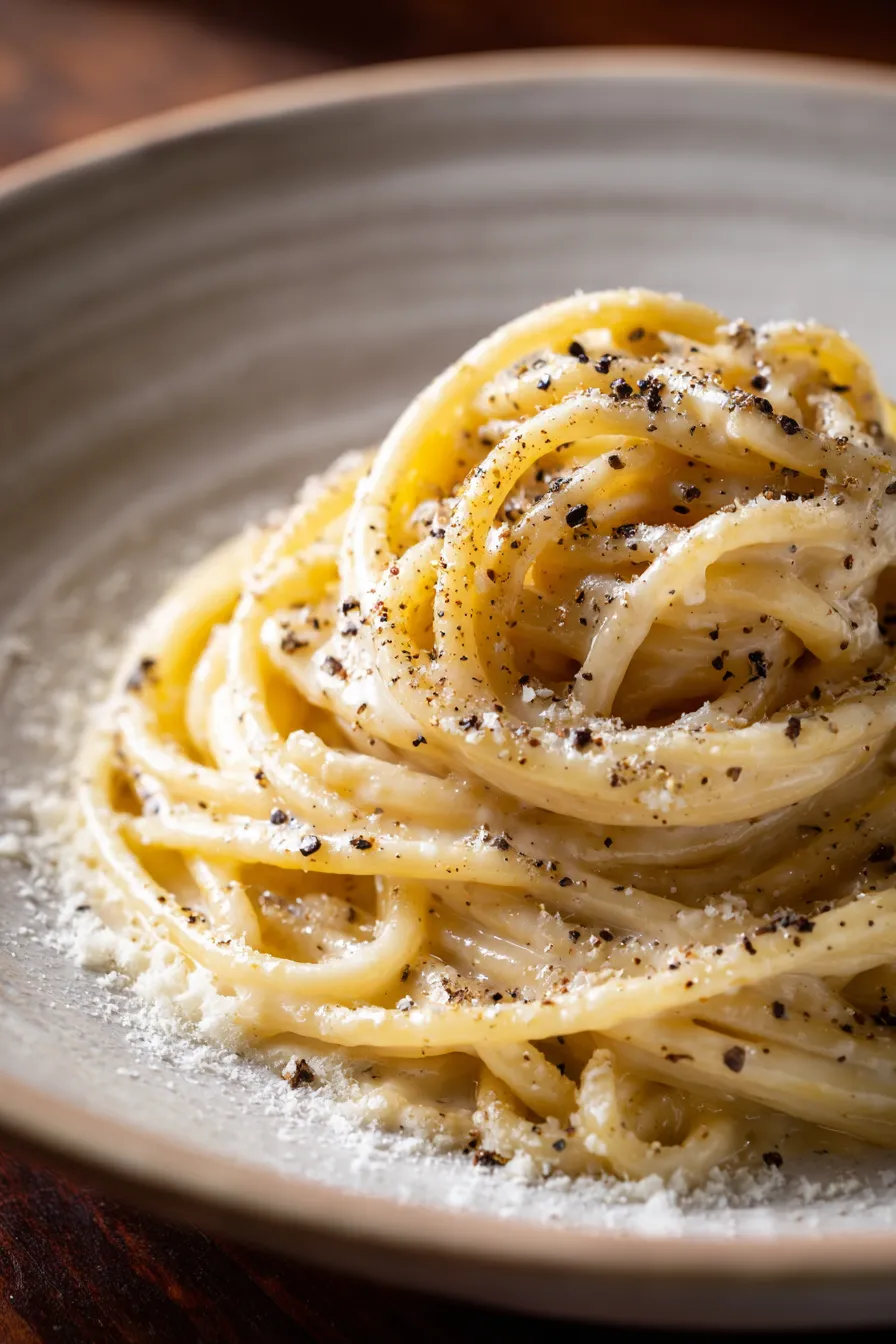
Four ingredients. Two of them are pasta and water.
Cacio e pepe should be the easiest thing in the world, and instead it is the dish I have failed at more times than any other. My early attempts came out as a pan of naked spaghetti with rubbery cheese welded to the bottom, which I would then scrape at while everyone waited.
The recipe was never wrong. I was putting cheese into a hot pan.
That is the entire problem, and once you know it the dish becomes genuinely simple. Pecorino is mostly protein, and protein in direct heat contracts and squeezes out its fat — which is a technical way of saying it turns into stringy lumps sitting in a puddle of grease. Take the pan off the burner first and the same cheese melts into something silky.
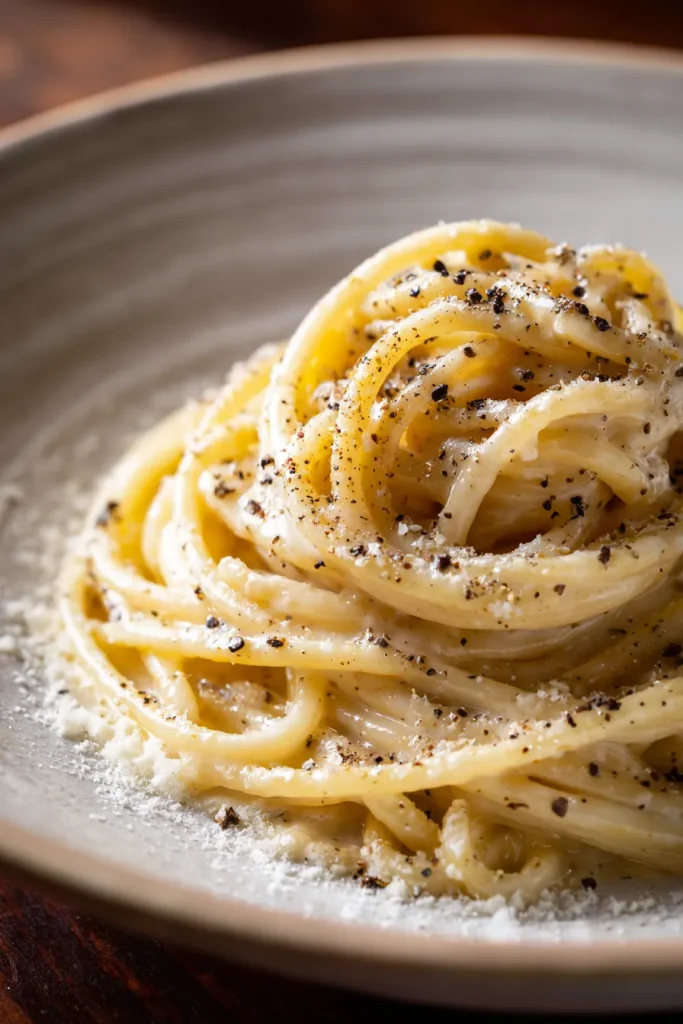
Why This Works
Off the heat, always. Ten seconds of patience between the burner and the cheese is the difference between silk and lumps.
Less water in the pot. Cooking 12 ounces of pasta in 2 quarts instead of 5 roughly doubles the starch concentration. That starch physically gets between the cheese proteins and stops them binding to each other.
Grate it fine. Fine gratings dissolve almost on contact. Coarse shreds need heat to melt, and heat is exactly what you cannot give them.
Make a paste first. Building the cheese into a thick cream before it meets the pasta means it arrives already emulsified, rather than trying to emulsify in a pan full of moving spaghetti.
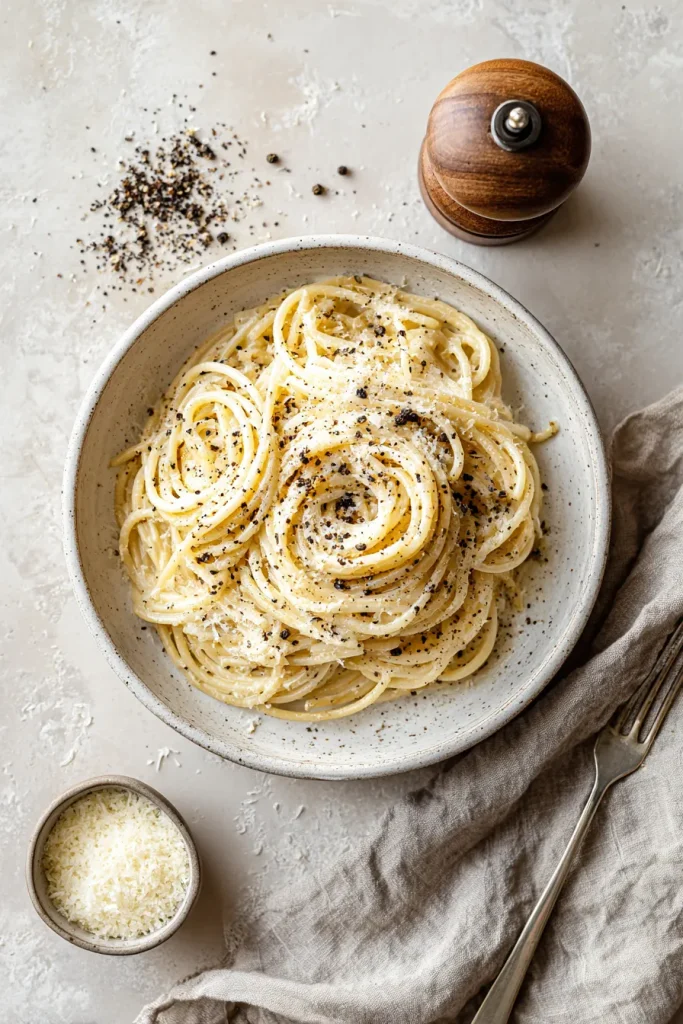
Recipe Overview
| Detail | Value |
| Prep time | 5 minutes |
| Cook time | 15 minutes |
| Total time | 20 minutes |
| Servings | 4 |
| Course | Main Course, Dinner |
| Cuisine | Italian — Roman |
| Ingredients | 4, and no cream or butter |
| Difficulty | Easy method, unforgiving timing |
Ingredients
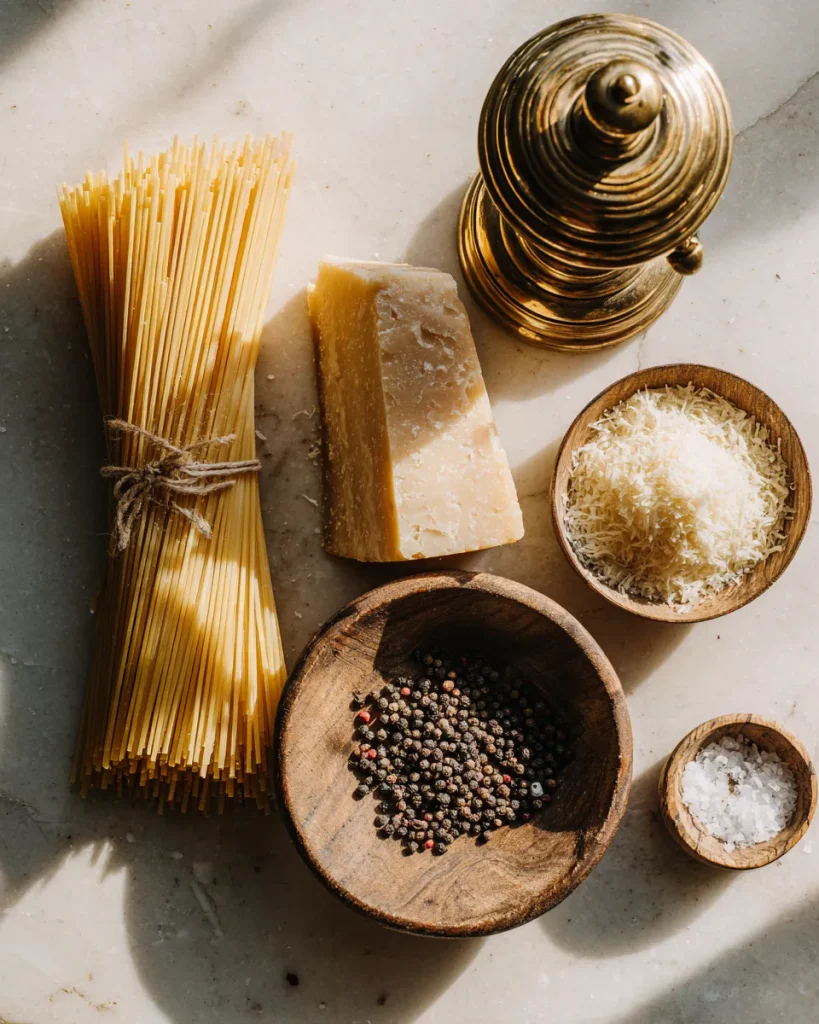
| Ingredient | Amount | Notes |
| Spaghetti, tonnarelli or bucatini | 12 oz (340 g) | Bronze-cut if you can find it — the rougher surface holds sauce |
| Pecorino Romano | 6 oz (170 g) | Grated very finely. Buy a wedge and grate it yourself |
| Black peppercorns | 2 tsp whole | Coarsely ground just before you cook |
| Kosher salt | 2 tsp | For the water only. Go lighter than usual |
On the Cheese
This is the ingredient worth spending on. Pecorino Romano is a hard sheep’s milk cheese and it is very salty and very sharp — that bite is the point of the dish. Look for DOP on the label.
Pre-grated cheese in a bag will not work here. It is coated in cellulose or potato starch to stop it caking, and that coating stops it emulsifying too. Grate from a wedge, on the finest side of the grater, and do it just before you cook.
If pure Pecorino is too aggressive for you, replace up to half of it with Parmesan. Past that, you are making something else.
Recipe Timing
| Stage | Time | What is happening |
| Grate and grind | 5 min | Fine Pecorino, coarse pepper |
| Boil pasta | 8–9 min | In half the usual water, pulled 2 min early |
| Toast pepper | 2 min | Dry pan, until fragrant |
| Build cheese paste | 2 min | Water added a spoon at a time |
| Finish in pan | 3 min | Toss, then off the heat, then cheese |
| Total | 20 min | Serve the second it is done |
Step-by-Step
1. Grate the cheese properly
Fine. Finer than feels reasonable. If your gratings look like little sticks, they are too big — go back to the small holes or use a rasp.
Put it in a wide bowl, not a narrow one. You need room to stir hard in the next step.
2. Boil the pasta in less water
Two quarts for 12 ounces of pasta. It will look stingy. That is deliberate — you want the water thick and cloudy by the end, because that cloudiness is dissolved starch and it is doing structural work.
Salt lightly. Six ounces of Pecorino is bringing an enormous amount of salt to this dish. Season the water as if the pasta were going to be eaten plain and you will overshoot badly.
3. Toast the pepper
Grind the peppercorns coarsely — you want gritty, not powder. Into a dry skillet over medium heat for a minute or two, shaking occasionally, until the smell changes and turns sharp and almost citrusy.
Add a ladle of pasta water, let it hiss and bubble for a few seconds, then pull the pan off the heat.
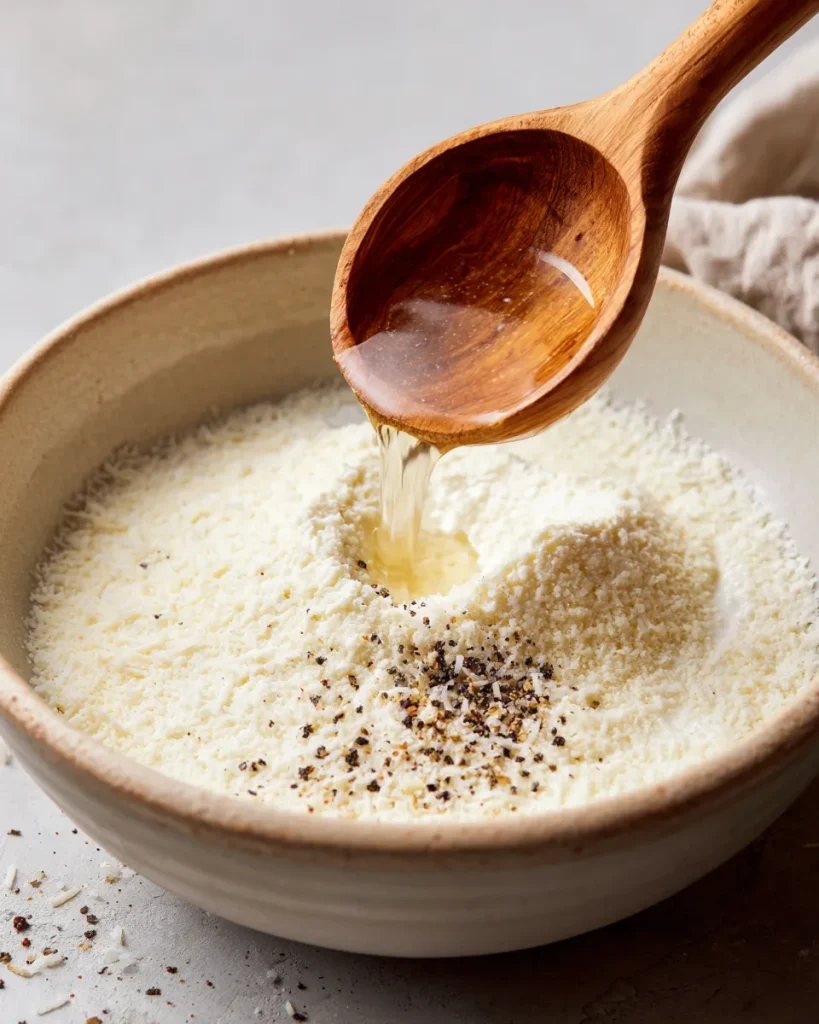
4. Build the cheese cream
Hot pasta water into the grated Pecorino, one tablespoon at a time, stirring hard between each one. It will look grainy and wrong at first, then it tightens into a thick paste roughly the texture of ricotta. About a third of a cup gets you there.
This is where impatience kills the dish. Tip in half a cup at once and you get cheesy water, which will never thicken no matter what you do to it afterwards.
5. Finish the pasta in the pan
Pull the pasta two minutes early — it is still going to cook. Reserve at least two cups of water, then move the pasta straight into the pepper skillet with tongs.
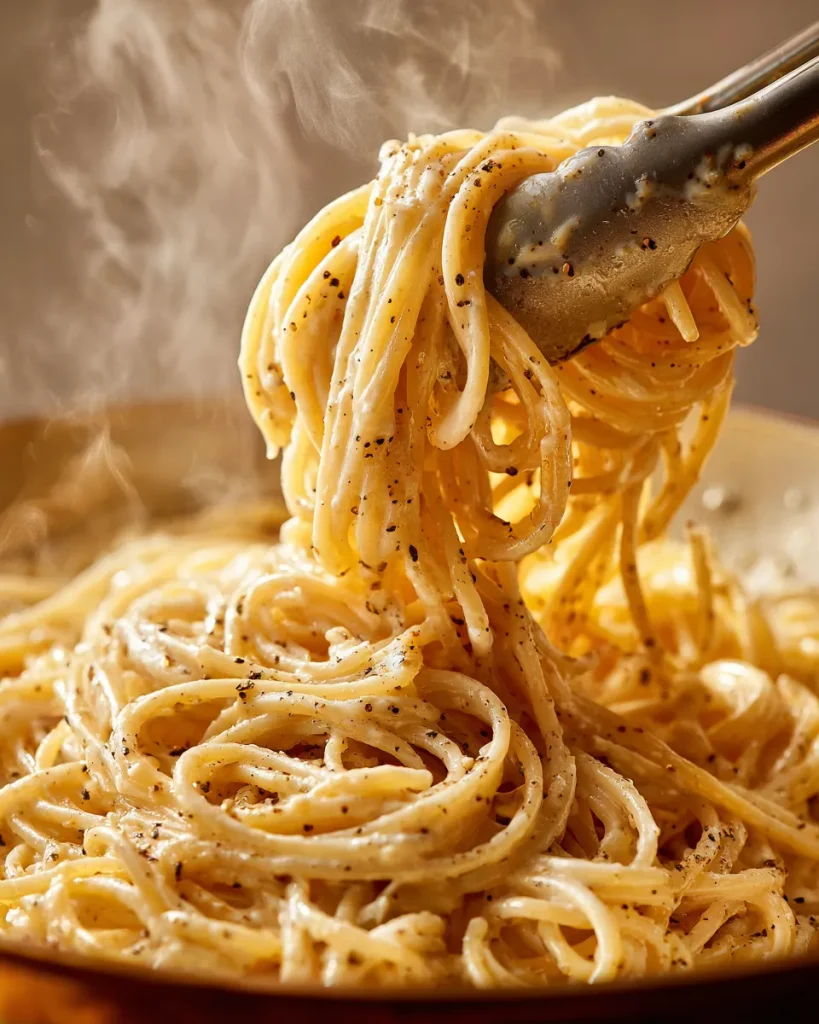
Back on medium heat for about two minutes, tossing, adding splashes of pasta water as it goes. Watch the liquid: it starts thin and watery and turns glossy and slightly syrupy. When it coats the back of a spoon, stop.
6. Off the heat. Then the cheese.
Take the pan off the burner and count to ten. Out loud, if it helps. This is the step, and rushing it is the only real way to ruin this dish.
Now add the Pecorino cream and toss hard — tilt the pan, keep everything moving, thirty to sixty seconds. Loosen with pasta water a tablespoon at a time until it slides rather than clumps.
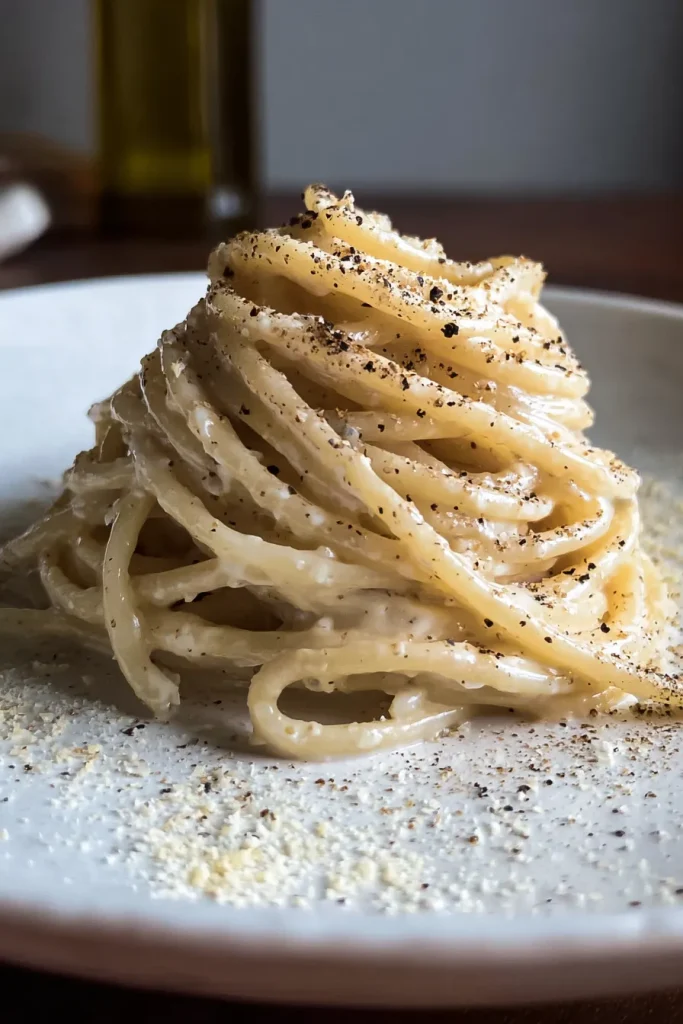
Serve straight away, into warmed bowls if you have thought that far ahead. Cacio e pepe waits for nobody; it tightens within a couple of minutes of sitting.
Tips and Variations
Warm your bowls. A cold bowl drops the temperature fast and the sauce stiffens before it reaches the table. Rinse them with hot water and dry them while the pasta cooks.
If it seizes, off the heat, splash of cool pasta water, whisk hard. Recovery rate is better than you would expect.
If it is too thick a minute after serving, that is normal — a spoonful of hot pasta water stirred through brings it straight back. Keep some in the pot.
Tonnarelli is the traditional shape, a square-cut fresh egg spaghetti. Bucatini is the popular substitute and its hollow centre holds sauce well. Ordinary spaghetti is completely fine.
Add pancetta and you have made carbonara’s cousin, gricia. Add egg on top of that and you have carbonara. This dish is the base of a whole Roman family.
Do not add cream. It will taste fine and it will not be this dish — and the starch emulsion is genuinely better once you can do it.
Serving Suggestions
Traditionally, nothing. It is a first course and it stands alone.
If you are making it the whole meal, something sharp on the side works well — a plain rocket salad with lemon, or sautéed broccoli for something warm.
Bread is useful for the last of the sauce. Homemade garlic bread is heavier than the Roman version would be, but nobody has ever objected.
And if you want the same four-ingredient simplicity with a completely different flavour, homemade basil pesto is the other classic that lives or dies on ingredient quality.
Storage and Reheating
Honestly: do not. This is the rare dish with no good leftover story. The emulsion breaks as it cools, the sauce separates in the fridge, and reheating gives you oily pasta with grainy cheese on it.
If you have some left, eat it cold the next day and accept it for what it is. Better still, scale the recipe to what you will actually finish — halving it works perfectly.
Frequently Asked Questions
Why does my cacio e pepe always clump?
Almost certainly heat. Cheese added to a pan that is still on the burner, or still hot enough to sizzle, will seize into strings. Take the pan off, wait ten seconds, then add it. The other two causes are gratings that are too coarse to dissolve, and pasta water that is too thin because you used a big pot of water.
Can I use Parmesan instead of Pecorino Romano?
You can use it for up to half, and it will be pleasant. It will also be milder and less sharp, because Parmesan is a cow’s milk cheese and Pecorino is sheep’s. The distinctive tang that makes people remember this dish comes from the Pecorino, so an all-Parmesan version is a different, gentler thing.
Is there really no butter or cream in it?
Not in the Roman original. The creaminess comes entirely from cheese fat emulsified with starchy water. Plenty of good versions add a little butter to make the emulsion more forgiving — it is a genuine help for beginners, and it is also why a lot of restaurant cacio e pepe tastes rounder and less sharp than the real thing.
How much pasta water should I save?
More than you think — at least two cups. You will use maybe half of it, but running out mid-toss with no way to loosen a stiffening sauce is a miserable place to be.
What does “cacio e pepe” mean?
Cheese and pepper. That is the entire name and the entire ingredient list, which tells you how little there is to hide behind.
More Simple Pasta Recipes
- Easy Creamy Garlic Pasta — the forgiving cream-based cousin, ready in 15 minutes.
- Lemon Ricotta Pasta with Spinach — another no-cook sauce that leans on cheese and starch.
- Easy Chicken Alfredo — for when you want rich and mellow rather than sharp.
- 10-Minute Shrimp Scampi — the same “few ingredients, get the timing right” school of cooking.
- Homemade Egg Noodles — if you want to go one step further back and make the pasta too.
Grate it fine, use less water, and take the pan off the heat. Everything else about this dish is easy.
Cacio e Pepe
Equipment
- Wide skillet or sauté pan 12 inches, wide enough to toss in
- Box grater or rasp grater the fine side
- Tongs
- Pepper mill or mortar and pestle for coarse grinding
Ingredients
- 12 ounces spaghetti, tonnarelli or bucatini about 340 g, a bronze-cut brand if you can
- 6 ounces Pecorino Romano about 170 g, grated as finely as you can manage
- 2 teaspoons whole black peppercorns coarsely ground just before cooking
- 2 teaspoons kosher salt for the pasta water only, and go light
Instructions
Set Up
- Grate the Pecorino as finely as you possibly can, using the small holes of a box grater or a rasp. Coarse shreds will not dissolve, and every lump in a bad cacio e pepe started life as a shred that was too big. Set it aside in a wide bowl.
- Boil the pasta in about half the water you would normally use — roughly 2 quarts for 12 ounces. Less water means more concentrated starch, and starch is what holds this sauce together. Salt it lightly; the Pecorino brings a great deal of salt on its own.
Bloom the Pepper
- Coarsely grind the peppercorns and tip them into a dry, wide skillet over medium heat. Toast for 1 to 2 minutes, shaking the pan, until they smell sharp and floral. Pre-ground pepper cannot do this.
- Add a ladleful of the pasta water to the pepper and let it bubble for a few seconds. Take the skillet off the heat and leave it there.
Make the Pecorino Cream
- Add hot pasta water to the grated Pecorino a tablespoon at a time, stirring hard after each addition. You are aiming for a thick, smooth paste about the consistency of ricotta — roughly 1/3 cup of water in total. Add it all at once and you get thin, watery cheese soup that will never come together.
Finish the Pasta
- Drain the pasta 2 minutes before the packet says al dente, reserving at least 2 cups of the water. Transfer the pasta straight into the pepper skillet with tongs.
- Return the skillet to medium heat and toss for about 2 minutes, adding pasta water a splash at a time, until the pasta finishes cooking and the liquid around it turns glossy and slightly syrupy. This is the step that builds the body of the sauce.
- Take the pan off the heat completely and count to ten. This is the whole recipe. Cheese added to a pan that is still hot will seize into stringy lumps — residual heat is more than enough to melt it.
- Add the Pecorino cream and toss hard and continuously for 30 to 60 seconds, tilting the pan and moving the pasta through the sauce. Loosen with pasta water a tablespoon at a time until it coats every strand. Serve immediately, with more pepper on top.