The first time I made baked feta pasta, I did what the video told me to do. Block of feta. Pile of tomatoes. Whole box of pasta. Forty minutes later I was stirring a pot of dry rigatoni with a few orange streaks in it, wondering what everyone had been so excited about.
It took me three more tries to work out that the recipe was never the problem. The ratio was.
A block of feta and two pints of tomatoes make roughly two cups of sauce. That is enough for eight ounces of pasta. Not sixteen. Every viral version I had watched used a full pound of pasta, and every one of them was quietly under-sauced.
Fix that one number and this becomes exactly what it promised to be: a creamy, tangy, faintly sweet tomato sauce that you never actually cooked. You just put a dish in the oven and smashed the results together.
Why This Version Works
Three things separate a good baked feta pasta from a disappointing one, and none of them are difficult.
The pasta ratio. Eight ounces of dry pasta to one block of feta. Sauce should coat pasta, not season it.
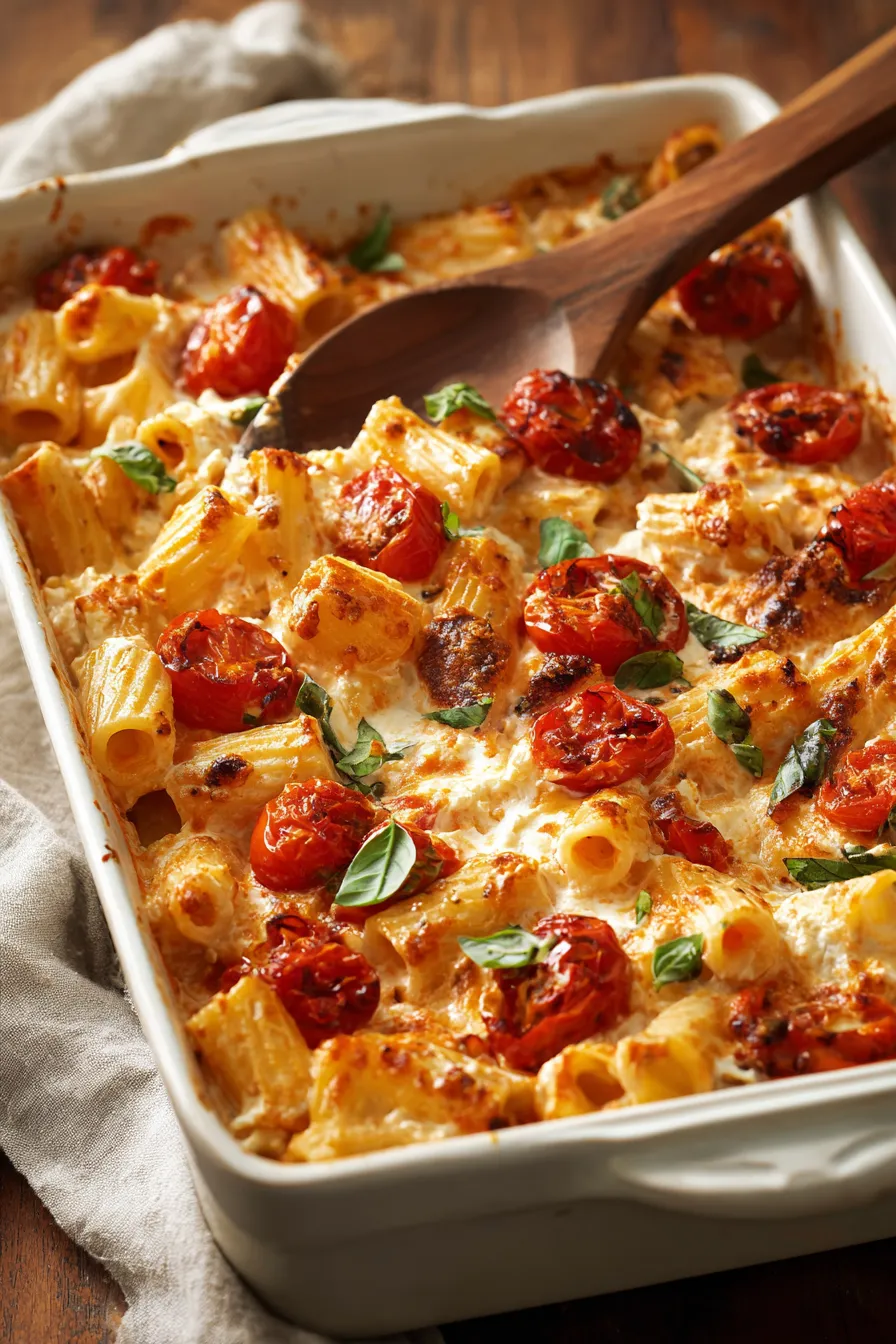
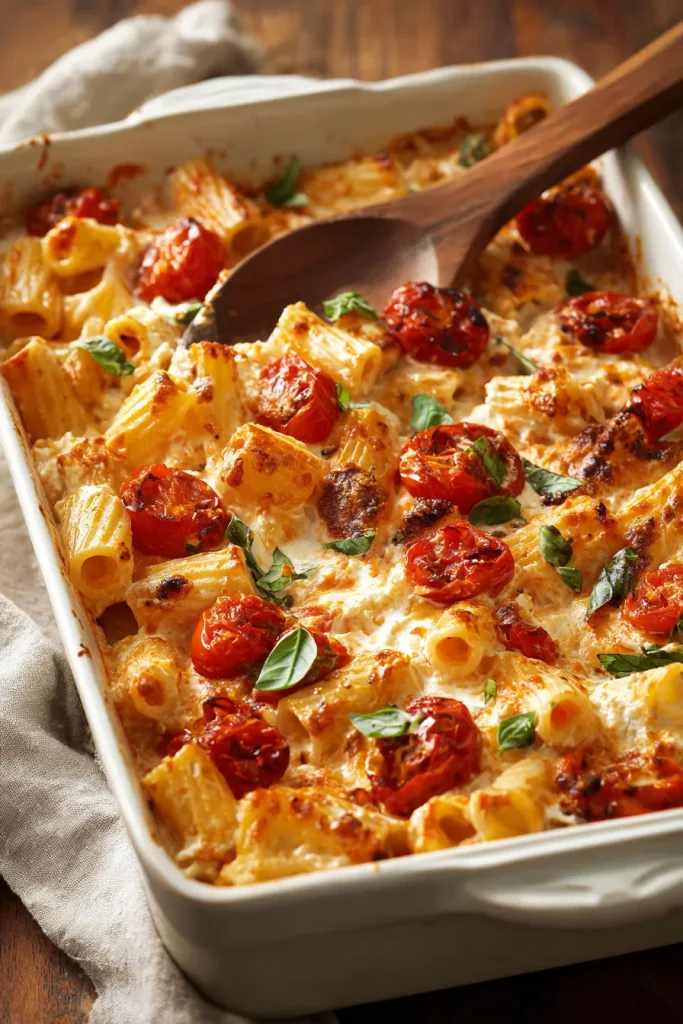
The second temperature. Most versions bake at a steady 400°F and stop there. Pushing the oven to 450°F for the last eight minutes blisters the tomato skins and puts golden-brown patches on the feta. That browning is the difference between “melted salty cheese” and something with actual depth to it.
Raw garlic at the end. The garlic goes in after the dish leaves the oven. Residual heat softens its bite without cooking it into sweetness, and that sharp edge is what keeps a very rich dish from tasting flat.
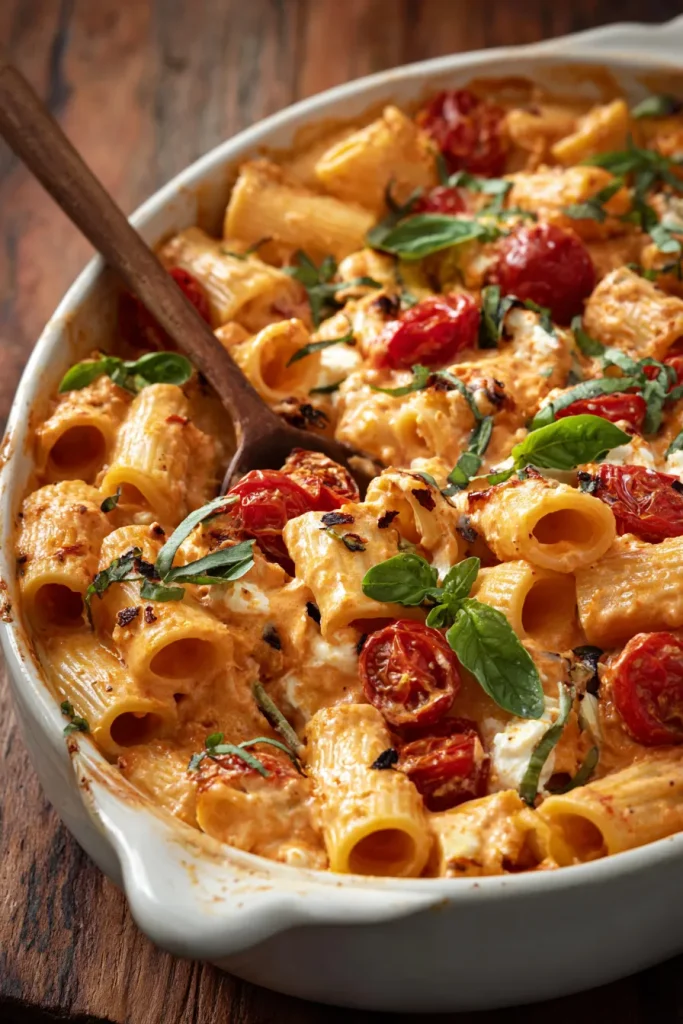
Recipe Overview
| Detail | Value |
| Prep time | 10 minutes |
| Cook time | 40 minutes |
| Total time | 50 minutes |
| Servings | 4 as a main |
| Course | Main Course, Dinner |
| Cuisine | Italian, Mediterranean |
| Difficulty | Easy — no sauce-making skill required |
| Best for | Weeknight dinner, meatless meals, feeding four with five ingredients |
Ingredients
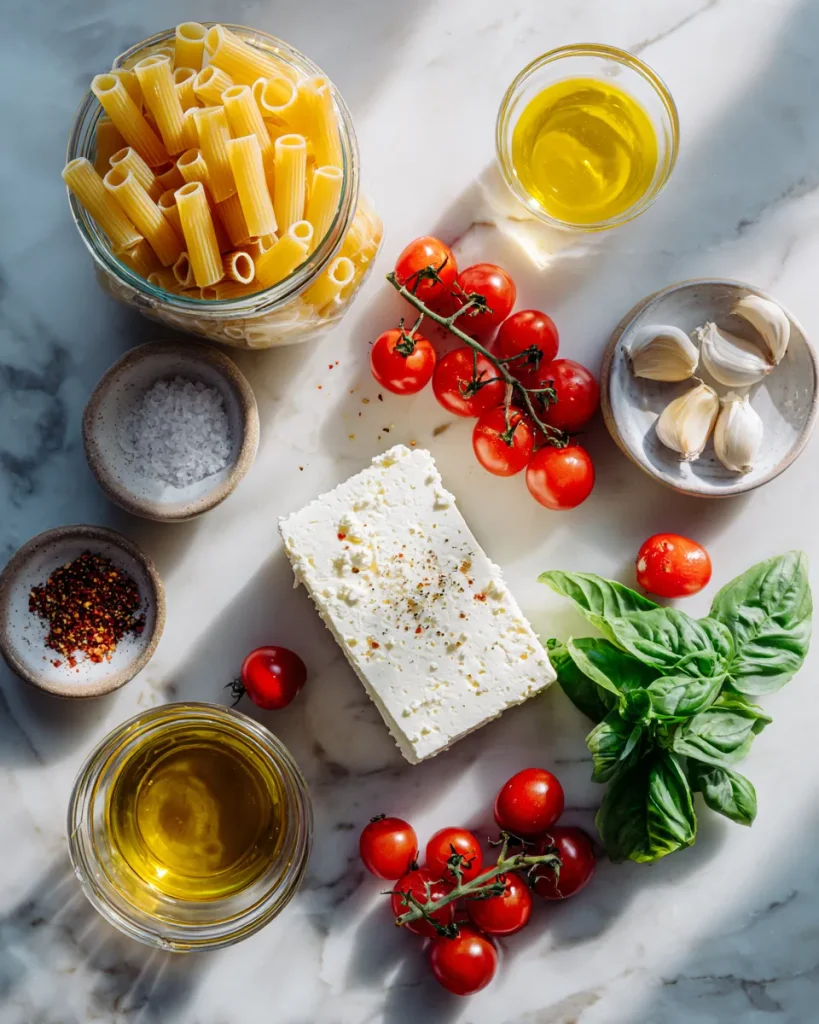
For the Roasted Feta Base
| Ingredient | Amount | Notes |
| Cherry or grape tomatoes | 2 pints (about 20 oz / 565 g) | Whole, not halved — they need to burst on their own |
| Block feta cheese | 8 oz (225 g) | Full-fat, packed in brine. Not the crumbled kind |
| Extra virgin olive oil | ½ cup | This is the body of the sauce, not just a cooking fat |
| Crushed red pepper flakes | ½ tsp | Cuts through the richness |
| Kosher salt | ½ tsp | Go light — feta is already salty |
| Black pepper | ¼ tsp | Freshly ground |
To Finish
| Ingredient | Amount | Notes |
| Short dry pasta | 8 oz (225 g) | Rigatoni, cavatappi or penne — ridges and tubes hold this sauce best |
| Garlic | 3 cloves | Finely minced, added off the heat |
| Fresh basil | ¼ cup packed | Torn, not chopped |
| Reserved pasta water | ½ cup | Do not forget this — it is what makes the sauce glossy |
| Grated Parmesan | 2 tbsp | Optional, for serving |
A Note on the Feta
This is worth being fussy about. Pre-crumbled feta will not work. It is dried on purpose and dusted with anti-caking starch so the pieces stay loose in the tub — exactly the opposite of what you need. It will soften in the oven and then sit there in stubborn little lumps.
Buy the block, packed in brine. Sheep’s milk feta melts the creamiest; cow’s milk is firmer and tangier and still perfectly good. Skip low-fat entirely.
Recipe Timing
| Stage | Time | What is happening |
| Prep | 10 min | Tossing tomatoes, nesting the feta, mincing garlic |
| Bake at 400°F | 30 min | Tomatoes soften and split, feta slumps |
| Bake at 450°F | 8–10 min | Skins blister, feta browns on top |
| Pasta | 10–12 min | Runs alongside the 450°F stage |
| Smash and toss | 3 min | Garlic, basil, pasta water, done |
| Total | 50 min | About 12 minutes of it hands-on |
Step-by-Step
1. Toss the tomatoes
Heat the oven to 400°F (205°C). Tip the tomatoes into a 9×13-inch or 3-quart baking dish, add the olive oil, salt, pepper and red pepper flakes, and toss until they are all glossy.
2. Nest the feta
Push the tomatoes to the edges and set the feta block in the middle. Turn it once or twice to coat it, then spoon a little more oil over the top.
Use a dish that is slightly too small rather than slightly too big. The tomatoes need to crowd against the cheese and against each other. Spread them out on a big sheet pan and their juice evaporates instead of pooling — and that juice is your sauce.
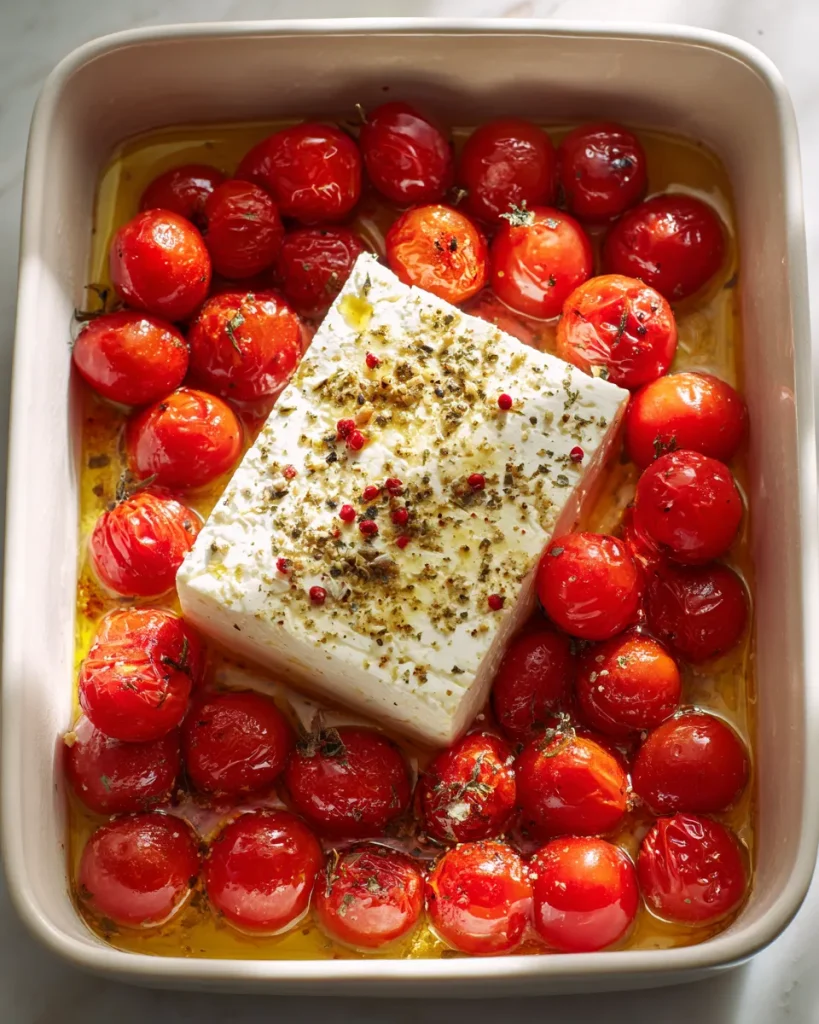
3. Bake, then push the heat
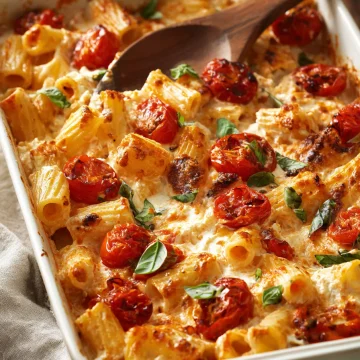
Thirty minutes at 400°F. The tomatoes will soften and a few will split, and the feta will slump into a rounded mound but stay pale.
Now raise the oven to 450°F and move the dish up to the top third. Eight to ten more minutes. You are waiting for two specific things: tomato skins that blister and wrinkle, and golden-brown patches across the top of the feta. If the feta is still uniformly white, give it another few minutes.
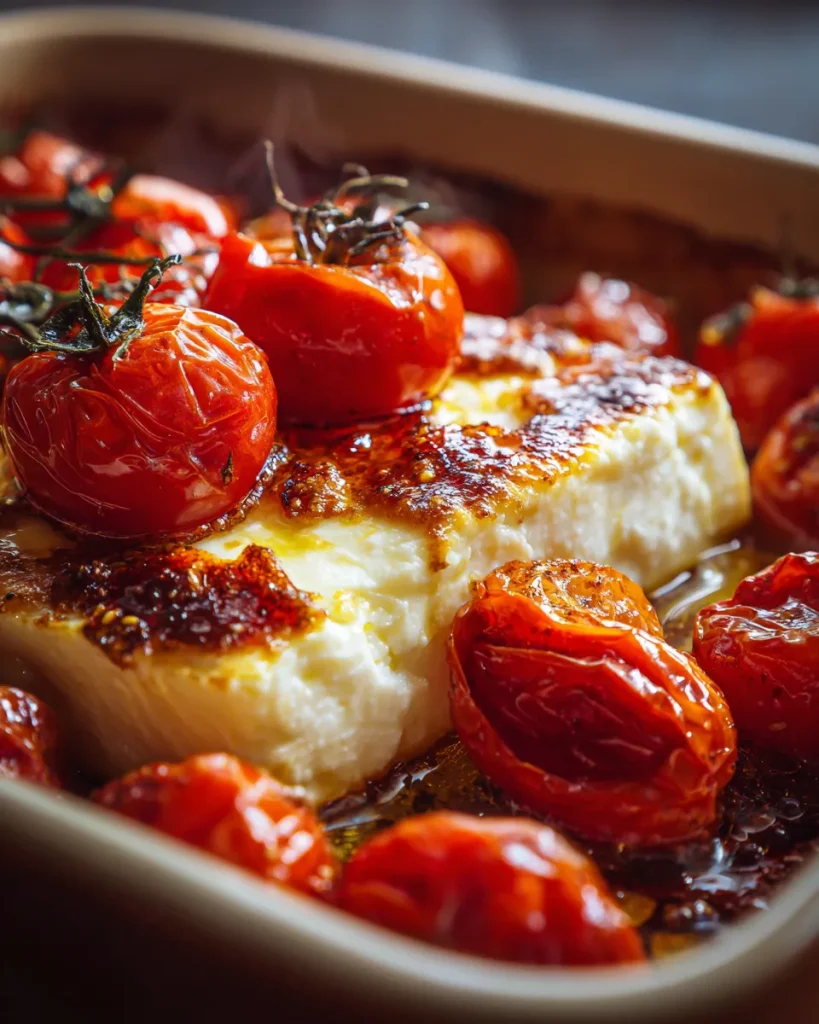
4. Boil the pasta
Start this when you raise the oven temperature. Salt the water properly and cook the pasta one minute short of the al dente time on the packet — it finishes in the sauce.
Reserve half a cup of the cooking water before you drain. Everyone says this and everyone forgets it. Leave a mug in the sink as a reminder.
5. Smash it into a sauce
Take the dish out and add the minced garlic and torn basil immediately, while everything is still spitting hot. Then go at it with the back of a wooden spoon — break the feta apart, crush the tomatoes, and keep stirring.
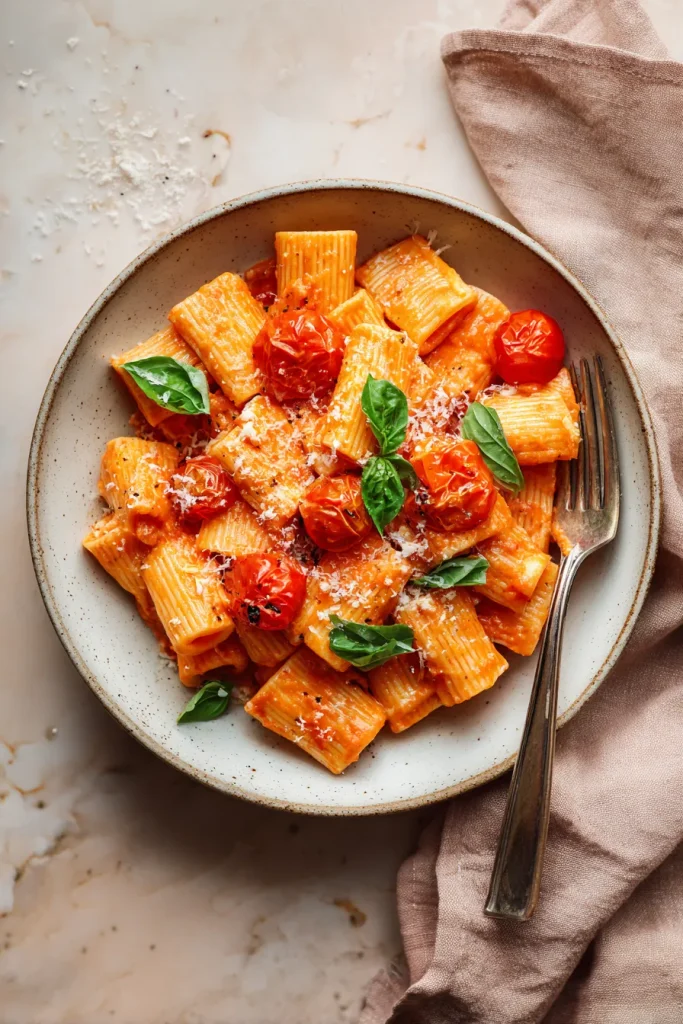
It looks wrong for the first thirty seconds. Lumpy, separated, a bit greasy. Keep going. Somewhere around the minute mark it pulls together into a loose streaky sauce the colour of a faded terracotta pot. That is the moment.
6. Toss and loosen
Add the drained pasta and fold it through. Then add the reserved pasta water two tablespoons at a time, tossing between each addition, until the sauce turns glossy and coats every ridge. Taste before you add any more salt — between the feta and the pasta water there is usually plenty already.
Tips and Variations
If your tomatoes are out of season, roast them for the full time and then add a teaspoon of honey or a splash of balsamic vinegar with the garlic. Winter cherry tomatoes are more acidic and less sweet, and they need the help.
If the sauce splits or looks oily, it needs more starch and more agitation. Add another two tablespoons of pasta water and keep tossing — it will come back together.
For a lighter version, drop the olive oil to ⅓ cup and add an extra half pint of tomatoes to make up the liquid. The sauce will be thinner and brighter rather than silky, so decide which you want.
To add protein, stir through shredded rotisserie chicken or a tin of drained cannellini beans at the tossing stage. Roasted shrimp scattered over the top also works, in the spirit of a quick shrimp scampi.
For more greens, drop a few handfuls of baby spinach into the hot pasta water for the last thirty seconds, then drain both together. It wilts perfectly and you do not dirty another pan.
Swap the herb. Basil is traditional, but a spoonful of homemade basil pesto stirred in at the end deepens everything considerably.
Serving Suggestions
It is rich, so it wants something sharp beside it. A plain rocket salad with lemon does the job.
Bread is close to mandatory — there is always sauce left in the dish, and leaving it there feels criminal. A slice of homemade garlic bread handles that neatly.
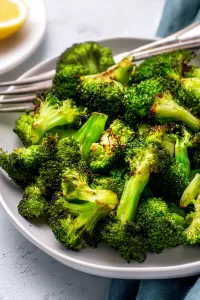
For a vegetable on the side, sautéed broccoli takes fifteen minutes and gives the plate some structure.
Storage and Reheating
Leftovers keep in an airtight container in the fridge for up to 3 days. The sauce firms up considerably once cold — that is the feta setting, and it is normal.
Reheat in a skillet over low heat with a splash of water or milk, stirring until it loosens. The microwave works if you stir it halfway through and add a spoonful of water first; going in dry tends to split the sauce and leave you with oily pasta.
Do not freeze it. Feta sauces turn grainy on thawing and no amount of stirring brings them back.
Frequently Asked Questions
Can I use crumbled feta instead of a block?
You can, but it will not melt properly. Crumbled feta is deliberately dried and coated in anti-caking starch so the pieces do not stick together in the tub, which is precisely the behaviour you are trying to avoid here. If it is genuinely all you can get, press it firmly into the centre of the dish so it at least bakes as one mass.
Why is my baked feta pasta dry?
Almost always too much pasta. A block of feta and two pints of tomatoes will sauce 8 ounces of dry pasta — half a standard box. The other likely cause is a baking dish that is too large, which lets the tomato juices evaporate instead of collecting.
Do I have to use cherry tomatoes?
Cherry or grape tomatoes are strongly preferred. Their skins hold the juice in until they burst, which concentrates the flavour, and their sugar content is higher than a large tomato’s. Chopped larger tomatoes release liquid too early and give you a watery, thin sauce.
What pasta shape works best?
Short shapes with ridges or hollows — rigatoni, cavatappi, penne, shells. This sauce is chunky rather than smooth, so it needs somewhere to sit. Long strands like spaghetti tend to shed it.
Can I make it ahead?
Not really, and this is worth being honest about. It is at its best within a few minutes of tossing. You can roast the feta and tomatoes a couple of hours in advance and leave the dish at room temperature, then reheat it at 350°F for ten minutes and carry on from the smashing step.
More Pasta Recipes to Try
- Easy Creamy Garlic Pasta — ready in 15 minutes when you want comfort without turning the oven on.
- Lemon Ricotta Pasta with Spinach — the same no-cook-sauce trick, but bright and lemony instead of roasted.
- Easy Baked Tortellini — if you liked letting the oven do the work, this one takes it further.
- Easy Chicken Alfredo — the creamy, savoury counterpoint to all this tang.
- Tomato Cucumber Feta Salad — the rest of the feta block, sorted.
If this is your first time, weigh the pasta. Eight ounces. That is the one step the videos never dwell on.
Baked Feta Pasta
Equipment
- 9×13-inch baking dish or any 3-quart ovenproof dish
- Large pot for the pasta
- Colander
- Wooden spoon for smashing the sauce
Ingredients
For the Roasted Feta Base
- 2 pints cherry or grape tomatoes about 20 oz / 565 g
- 8 ounces block feta cheese full-fat, packed in brine — not crumbled
- 1/2 cup extra virgin olive oil
- 1/2 teaspoon crushed red pepper flakes or to taste
- 1/2 teaspoon kosher salt
- 1/4 teaspoon freshly ground black pepper
To Finish
- 8 ounces short dry pasta rigatoni, cavatappi, or penne
- 3 cloves garlic finely minced
- 1/4 cup fresh basil leaves packed, torn
- 1/2 cup reserved pasta water more as needed
- 2 tablespoons grated Parmesan cheese for serving, optional
Instructions
Roast the Feta and Tomatoes
- Heat the oven to 400°F (205°C). Pour the cherry tomatoes into a 9×13-inch or 3-quart baking dish. Add the olive oil, kosher salt, black pepper, and red pepper flakes, then toss until every tomato is glossy.
- Push the tomatoes aside and nest the feta block in the centre. Turn it over once or twice so both sides pick up oil, then spoon a little extra over the top. The tomatoes should crowd right up against the cheese — a snug dish gives you sauce, a roomy one gives you dry tomatoes.
- Bake for 30 minutes. The tomatoes will soften and start to split, and the feta will slump but stay pale.
- Raise the heat to 450°F (230°C) and move the dish to the upper third of the oven. Bake another 8 to 10 minutes, until the tomato skins blister and the feta picks up golden-brown patches on top. This is where the flavour is — do not skip it.
Cook the Pasta and Bring It Together
- While the dish is at 450°F, boil the pasta. Salt the water well and cook the pasta one minute short of the package time for al dente. Before draining, scoop out 1/2 cup of the starchy cooking water and set it aside.
- Pull the dish from the oven and add the minced garlic and torn basil straight away. The residual heat is enough to take the raw edge off the garlic without browning it. Now mash everything together with the back of a wooden spoon — break the feta down, burst the tomatoes, and keep stirring for 60 to 90 seconds until it turns into a loose, streaky pink-orange sauce.
- Tip in the drained pasta and fold it through. Add the reserved pasta water 2 tablespoons at a time, tossing between additions, until the sauce turns glossy and clings to every piece. You may not need all of it.
- Taste and adjust. Feta brings a lot of salt on its own, so season carefully. Serve straight from the dish with grated Parmesan and a little more basil on top.