
I was sitting at my desk yesterday. Tapping away on my trusty Logitech K380 keyboard. Outside? Just another rainy day here in Chattogram. Honestly, it was the perfect weather for baking bread.
Thinking about bread brought back memories of my very first crusty loaf. It felt like pure magic pulling it from the oven. Today, I want to guide you through this beautiful artisan process. Think of me as your friendly kitchen companion. We will tackle this simple recipe together.
You only need four basic things to start. Flour. Water. Starter. And salt.
Sourdough relies entirely on wild yeast. No commercial yeast packets are needed here. This natural fermentation creates a wonderful, tangy flavor. The slow resting process also breaks down stubborn gluten. The result? A loaf that is much easier to digest. Plus, your entire kitchen will smell absolutely incredible.
Many people feel intimidated by the lengthy process. But don’t worry. The actual hands-on time is very minimal. It is a lot like planting a garden. You are mostly just waiting for nature to do its thing.
Before we mix anything, let’s get organized. Setting up a proper mise en place is absolutely crucial. I am a huge believer in kitchen efficiency. Weighing your components ahead of time is key. It reduces so much unnecessary kitchen stress.
A digital scale ensures absolute precision for your wet dough. Measuring by weight yields much better results than using cups. When everything is measured and ready, the process flows smoothly.
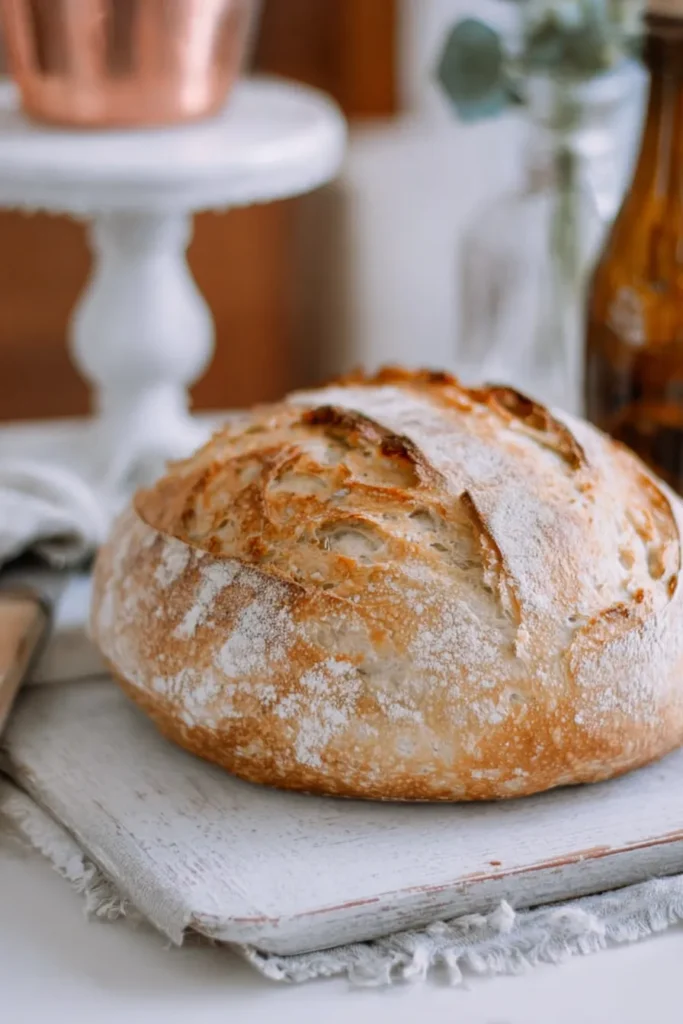
Let’s talk about our specific ingredients. Using unbleached all-purpose flour keeps this recipe highly accessible. Your sourdough starter must be very active. It needs to be bubbly and recently fed. Filtered, room-temperature water helps keep the wild yeast happy. Tap water often contains chlorine. That chlorine can actually harm your delicate yeast. Finally, a good quality salt enhances the final flavor.
Here is exactly what you will need for our bake. Please gather these specific ingredients before we begin.
| Ingredient | Quantity | Notes |
| All-purpose flour | 475 grams (3 1/2 cups) | Unbleached flour provides the very best results. |
| Sourdough starter | 100 grams (1/2 cup) | Must be highly active, fed, and bubbly. |
| Water | 325 grams (1 1/3 cups) | Room temperature and filtered is highly preferred. |
| Salt | 10 grams (2 teaspoons) | Sea salt or standard kosher salt works perfectly. |
Recipe Timing:
Prep Time: 30 minutes | Cook Time: 45 minutes | Additional Time: 15 hours | Total Time: 16 hours 15 minutes | Servings: 1 loaf | Difficulty: Medium
Now, let’s dive into the dough preparation. Start by feeding your starter a few hours prior. It needs to be wonderfully bubbly and highly active. Drop a small spoonful of starter into a water glass. Does it float beautifully at the top? Then you are ready. This simple float test guarantees your bread will rise.
Grab your largest mixing bowl. Pour in your warm filtered water and the bubbly starter. Mix them together. The liquid should look slightly milky white. Add your all-purpose flour and precisely measured salt. Use a wooden spoon. Or just use your clean, bare hands.
Mix everything well. Stop when no dry flour spots remain visible. You will have a very sticky, shaggy pile of dough.
Cover the mixing bowl with a slightly damp kitchen towel. Let this messy mixture rest for exactly thirty minutes. This vital resting phase hydrates the dry flour completely. Bakers call this the autolyse phase. Think of it like soaking a dry sponge in water. It helps the dough become much easier to handle later.

Next, we will build dough strength. But we won’t knead this wet dough in a traditional way. Instead, we use a method called stretch and folds. Grab one side of the sticky dough mass. Pull it up gently. Wait until you feel a firm resistance. Fold that stretched piece completely over the center.
Rotate your bowl slightly. Repeat this gentle pulling action. Do this four times to complete one full round.

Cover the bowl again. Wait another thirty minutes patiently. You need to complete three more stretch and fold rounds today. Space each folding round exactly thirty minutes apart.
Notice how the dough becomes remarkably smoother each time. It transforms from a shaggy mess into a smooth ball. Pro tip: Wet your hands slightly before touching the dough. This simple trick prevents it from sticking excessively to your fingers.
Now begins the bulk fermentation. This is the main rising phase for our bread. Leave your covered bowl in a cozy, warm spot. The dough needs to double in physical volume. This rising phase usually takes between six and twelve hours.
Are you baking on a highly humid, rainy day? Watch your dough very closely. Warm humidity speeds up natural fermentation significantly. Do not let the dough over-ferment. It will literally become a soupy puddle. Look for distinct bubbles on the smooth top surface.
Once doubled, turn the dough gently onto a clean counter. Fold the edges inward to form a loose ball. Let this dough ball rest uncovered for exactly twenty minutes. This brief rest develops a slight protective skin on top.
Flip the dough over. Shape it into a tight round. Pull the dough toward you along the counter. This dragging motion creates necessary surface tension. Place it upside down into a heavily floured banneton basket.

Cover the basket securely. You want to prevent the dough from drying out overnight. Place it directly into your cold refrigerator for the night. This extended cold proof is amazing because:
- It deepens that signature tangy sourdough flavor.
- It makes the wet dough much easier to score tomorrow.
The next morning, it is finally time to bake. Place your heavy Dutch oven inside a completely cold oven. Preheat the oven safely to 500 degrees Fahrenheit. Let the empty pot heat for one full hour inside.
This intense, trapped heat is vital. It creates the perfect bakery-style crust finish. The heavy iron pot mimics an expensive professional steam oven.
Pull your cold dough directly from the chilly fridge. Turn it gently out onto a large piece of parchment paper. Use a sharp baker’s razor to score the top surface. A single deep slash works perfectly for a beginner.
Why score the bread? This deep slash allows hot steam to escape safely. It prevents your beautiful loaf from bursting open randomly. You can try intricate leaf designs later. Stick to the basics until you feel confident.
Carefully remove the blazing hot pot from your oven. Lift the parchment paper. Lower the cold dough inside. Put the heavy iron lid securely back on top. Return the whole covered pot to the extremely hot oven. Bake it completely covered for exactly twenty minutes. No peeking! The trapped steam helps the bread rise incredibly high.

Remove the hot lid carefully. Please use your thickest oven mitts. Reduce your oven temperature immediately down to 475 degrees Fahrenheit. Bake for another twenty minutes.
Watch until the crust turns deeply golden. The bread should sound somewhat hollow when tapped on the bottom. Remove the finished loaf. Cool it on a wire rack.
You must let it cool completely before slicing. Cutting warm bread ruins the soft, airy interior. The bread actually continues cooking internally while it rests on the counter. Waiting is always the hardest part. But the final texture is completely worth it. Once cooled, slice it thick. Serve it simply with high-quality butter. An unforgettable treat.
Frequently Asked Questions
Can I substitute bread flour for all-purpose flour here?
Yes, you can absolutely use bread flour for this beginner recipe. Bread flour absorbs slightly more water than standard all-purpose flour. You might just need to add a small splash of extra water.
How do I know my sourdough starter is truly ready?
Your starter should double in overall size after a fresh feeding. It should look very spongy. Look for lots of active bubbles throughout. It must pass the simple float test in a water glass.
Why is my mixed dough so incredibly sticky and messy?
Sourdough is naturally much wetter than standard commercial yeast dough. It is just the nature of the beast. Wetting your bare hands slightly prevents sticking during folds. Resist the strong urge to add extra handfuls of dry flour.
Can I bake this recipe without a heavy Dutch oven?
A Dutch oven is best for trapping the essential baking steam. But you can easily bake on a heavy pizza stone instead. Just place a metal pan of boiling water below the hot stone in your oven.
What happens if I over-proof my sourdough bread dough?
Over-proofed dough becomes very flat. It gets excessively sticky and structurally weak. It will likely bake into a flat, dense, gummy disc. But do not throw it away. You can still use it for making tasty homemade soup croutons!

Beginner Sourdough Bread Recipe
Ingredients
Dough Ingredients
- 475 g all-purpose flour Unbleached flour provides the very best results.
- 100 g sourdough starter Must be highly active, fed, and bubbly.
- 325 g water Room temperature and filtered is highly preferred.
- 10 g salt Sea salt or standard kosher salt works perfectly.
Instructions
- Feed your starter a few hours prior. Drop a small spoonful into a water glass to test if it floats to ensure it is ready.
- In a large bowl, mix the warm filtered water and bubbly starter until milky white. Add the flour and salt, mixing until no dry flour spots remain.
- Cover the mixing bowl with a damp towel and let rest for exactly 30 minutes for the autolyse phase.
- Complete 4 rounds of stretch and folds, spacing each round exactly 30 minutes apart. Pull one side of the dough up gently and fold it over the center, rotating the bowl to repeat 4 times per round.
- Cover the bowl and let the dough bulk ferment in a warm spot for 6 to 12 hours until it doubles in volume.
- Turn the dough gently onto a clean counter, fold the edges inward to form a loose ball, and rest uncovered for 20 minutes.
- Flip the dough over, shape it into a tight round to create surface tension, and place it upside down into a heavily floured banneton basket.
- Cover the basket securely and place it directly into your refrigerator overnight for a cold proof.
- The next morning, place a heavy Dutch oven inside a cold oven and preheat to 500 degrees Fahrenheit for one hour.
- Turn your cold dough onto a piece of parchment paper and score the top surface with a baker’s razor.
- Lower the dough into the hot Dutch oven using the parchment paper. Cover with the lid and bake for 20 minutes.
- Remove the hot lid, reduce the oven temperature to 475 degrees Fahrenheit, and bake for another 20 minutes until deeply golden. Cool completely on a wire rack before slicing.