There’s nothing quite like a warm, freshly fried piece of dough.
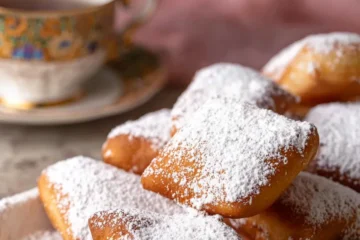
If you’ve ever wandered into a New Orleans cafe, you already know what I mean. The air hits you first. Sweet vanilla. Hot oil. And every single table is covered in a thick snowfall of white powdered sugar.
That’s the magic we’re chasing today.
You don’t need a plane ticket. You don’t need a fancy bakery. You just need this recipe, a little patience, and a candy thermometer.
Wait, Deep Frying at Home?
I hear you. Yeast doughs can feel intimidating. And deep frying? That sounds like a whole production.
But here’s the truth: homemade beignets are more forgiving than you’d think. The dough comes together easily. The frying goes fast. And the payoff? Absolutely worth every floury countertop.
My job today is to walk you through every single step so you feel confident the whole way through.
What Makes This Recipe Work
This is an enriched dough. That means we’re adding butter, milk, and egg alongside the flour. These ingredients work together to tenderize the dough from the inside out.
The result is a pastry that’s:
- Crispy and golden on the outside
- Pillowy and cloud-soft on the inside
- Rich enough to stand up to a mountain of powdered sugar
That textural contrast is exactly what makes beignets so hard to stop eating.
The One Tool You Cannot Skip
Before we go any further, let’s talk about your candy thermometer.
This is non-negotiable.
Oil temperature is everything when frying dough. Too cold, and the dough soaks up the grease like a sponge. You’ll end up with heavy, oily squares that sit in your stomach like bricks. Too hot, and the outside burns before the inside even gets a chance to cook.
A thermometer takes all the guesswork out of it. We’re targeting 360°F, and we’re staying there.
One More Thing About the Dough
This dough is designed to be sticky. That’s intentional.
When you reach into the bowl and it clings to your fingers a little, that’s a good sign. Resist the urge to add more flour. I know it feels wrong. But extra flour is what turns light, airy beignets into dense, sad squares.
Flour your surface generously when rolling. Work quickly. And trust the process.

About the Shape
Here’s something that took me a while to accept: your squares don’t need to be perfect.
A pizza cutter is your best tool here. Slice the dough into rough two-inch pieces. Some will be rectangular. Some will look a little wonky. That’s completely fine.
The moment those imperfect little squares hit the hot oil, something almost magical happens. They puff up into gorgeous golden pillows. Every single one.
Get Ready for a Mess
Fair warning: beignets are not a polite food.
The powdered sugar goes everywhere. On your shirt. On your chin. On the table. That’s not a flaw in the recipe. That’s just the authentic experience.
Pair them with a strong cup of coffee. The bitterness cuts right through the sweetness. It’s one of those combinations that just makes sense.
Okay. Let’s get into it.
The Beignets Recipe
Prep Time: 30 minutes | Cook Time: 15 minutes | Inactive Time: 2 hours | Total Time: 2 hours 45 minutes | Servings: 20 | Difficulty: Moderate
Ingredients
| Ingredient | Quantity | Notes |
|---|---|---|
| Warm water | ¾ cup | Must be between 100-110°F to activate yeast |
| Granulated sugar | ½ cup (100g) | Divided use (half for yeast, half for dough) |
| Active dry yeast | 2¼ teaspoons | Equals one standard 0.25-oz/7g packet |
| Large egg | 1 | Must be at room temperature for smooth mixing |
| Whole milk | ½ cup (120ml) | Evaporated milk works nicely too; room temp |
| Vanilla extract | 2 teaspoons (10ml) | Use pure extract for the best flavor |
| All-purpose flour | 3¾ to 4 cups | Divided use (450-480g total) |
| Salt | 1 teaspoon | Balances the sweetness of the dough |
| Unsalted butter | 3 tablespoons (42g) | Must be very soft at room temperature |
| Frying oil | As needed | Vegetable oil or peanut oil work best |
| Powdered sugar | ½ cup (60g) | Used generously for dusting the finished pastry |

Step-by-Step Instructions
Step 1: Activate the Yeast
Pour your warm water into a large mixer bowl. Check the temperature. It needs to sit between 100-110°F — warm like a comfortable bath, not hot like a stove burner.
Add the yeast and exactly half of your granulated sugar. Stir gently, then leave the bowl alone for five minutes.
When you come back, you should see a thick, foamy layer on top. That foam is your green light. It means the yeast is alive and ready to go. If there’s no foam after ten minutes, your water was probably too hot or too cold. Start fresh with a new packet.
Step 2: Mix the Wet Ingredients
Once the yeast is beautifully foamy, pour in the room temperature milk. Add the vanilla extract, the remaining sugar, and the egg.
Whisk everything together until the mixture looks completely smooth and uniform.
Step 3: Begin Adding Flour
Measure out 1¾ cups of all-purpose flour and add it to the bowl. Whisk it into the wet mixture until smooth. At this stage, you’ll have a very wet, sticky base batter. That’s exactly right.

Step 4: Knead the Dough
Attach the dough hook to your stand mixer. Add 2 more cups of flour along with the salt. Turn the mixer to medium speed and let it run until the flour disappears into the dough.
Now, with the mixer still running, add the soft butter one tablespoon at a time. Don’t rush this part. Give each tablespoon a moment to fully incorporate before adding the next.
Step 5: Perfect the Texture
Stop the mixer and scrape down the sides of the bowl. Resume mixing on low speed for about four more minutes.
The dough should start pulling away from the sides of the bowl. It’ll still feel sticky when you touch it, and that’s fine. If it looks more like soup than dough, add the final ¼ cup of flour.
Step 6: Let the Dough Rise
Transfer the dough into a large, lightly oiled bowl. Cover it tightly with plastic wrap or a damp kitchen towel. Place it somewhere warm in your kitchen and leave it alone for two full hours.
You’re waiting for the dough to double in size. Don’t rush it. This is where all that airy, pillowy texture comes from.

Step 7: Roll and Cut
While the dough finishes rising, set up your frying station.
Fill a heavy pot with about three inches of oil. Clip your candy thermometer to the side. Heat the oil over medium-high until it reaches 360°F.
Once the dough has risen, punch it down gently. Transfer it to a well-floured surface and roll it out to about half an inch thick. Then use your pizza cutter to slice rough two-inch squares. Don’t stress over the shape.
Step 8: Fry to Perfection
Carefully drop three to four squares into the hot oil. Don’t crowd the pot.
Fry the first side until it’s deeply puffed and golden. This takes about one full minute. Flip each piece using a metal spider strainer or a slotted spoon. Fry the second side for another minute until it matches.

Step 9: Drain and Dust
Remove the beignets from the oil immediately. Place them on a wire rack lined with paper towels to drain for just a minute.
Then hit them with a very generous blizzard of powdered sugar while they’re still hot. The warmth helps the sugar melt slightly into the crust.
Serve them right away. These are a right-now kind of food.
Troubleshooting and Common Questions
Even with a great recipe, things don’t always go perfectly the first time. Yeast doughs are sensitive. Kitchen humidity, room temperature, even the age of your yeast packet can all play a role. Here are the most common hiccups and how to fix them.
Can I make the dough ahead of time?
Yes, and honestly the overnight version might be even better.
Mix the dough completely, skip the warm-room rise, and place the covered bowl straight into the refrigerator for up to 48 hours. The yeast works slowly in the cold, and that slow fermentation builds a deeper, more complex flavor in the finished pastry.
When you’re ready to fry, pull the dough out and let it sit at room temperature for about an hour before rolling.
Why didn’t my beignets puff up?
Flat beignets almost always point to one of two problems:
- Dead yeast. If your water was too hot during activation, it killed the yeast before it could do anything. No foam after 10 minutes means start over with a fresh packet.
- Oil that was too cool. The dough needs an immediate blast of 360°F heat to create steam and puff up. If the oil is lukewarm, the dough just sits there and absorbs grease.
Check your thermometer before every single batch. It makes a real difference.
What’s the best oil to use?
You want an oil with a high smoke point. Here’s a quick breakdown:
| Oil | Smoke Point | Flavor Notes | Best For |
|---|---|---|---|
| Peanut oil | 450°F | Lightly nutty, clean | Traditional, classic choice |
| Vegetable oil | 400-450°F | Neutral | Easy, accessible option |
| Canola oil | 400°F | Neutral | Budget-friendly and reliable |
| Olive oil | 375°F | Strong, grassy | Not recommended for this recipe |
Peanut oil is the traditional southern choice. But vegetable or canola oil work perfectly well if that’s what you have on hand.
Can I bake these instead of frying?
I’d strongly advise against it.
This dough was built specifically for deep frying. The rapid heat of the oil is what creates that signature hollow, airy center. If you bake these squares in the oven, they’ll come out as dense little rolls. They’ll smell like sweet vanilla bread and taste fine, but they won’t be beignets.
How do I store leftovers?
The honest answer is that beignets don’t really keep well. They’re best eaten within an hour of frying, while the outside is still crisp and warm.
If you do need to save some, store them in an airtight container and reheat in a 350°F oven for about four minutes. Avoid the microwave entirely. It turns them rubbery and sad. And give them a fresh dusting of powdered sugar before serving.
A Final Word
Making beignets from scratch is one of those kitchen projects that teaches you a lot. You learn about oil temperature. You learn about dough hydration. You learn that some of the best foods in the world are just flour, yeast, butter, and a little bit of patience.
And when you pull that first golden, puffy batch out of the oil and bury it in powdered sugar? You’ll understand exactly why people fly to New Orleans just for this.
Grab your flour. Check your yeast. And enjoy every single messy, sugary bite.

Classic New Orleans Beignets
Ingredients
- 3/4 cup warm water Must be between 100-110°F to activate yeast
- 1/2 cup granulated sugar Divided use (half for yeast, half for dough)
- 2 1/4 tsps active dry yeast Equals one standard 0.25-oz/7g packet
- 1 large egg Must be at room temperature for smooth mixing
- 1/2 cup whole milk Evaporated milk works nicely too; room temp
- 2 tsps vanilla extract Use pure extract for the best flavor
- 3 3/4 to 4 cups all-purpose flour Divided use
- 1 tsp salt Balances the sweetness of the dough
- 3 tbsp unsalted butter Must be very soft at room temperature
- frying oil As needed (vegetable oil or peanut oil work best)
- 1/2 cup powdered sugar Used generously for dusting the finished pastry
Instructions
- Activate the Yeast: Pour warm water into a large mixer bowl and ensure it sits between 100-110°F. Add the yeast and half of the granulated sugar. Stir gently and leave for 5 minutes until a thick, foamy layer forms on top.
- Mix the Wet Ingredients: Pour the room temperature milk, vanilla extract, remaining sugar, and the egg into the foamy yeast mixture. Whisk together until completely smooth and uniform.
- Begin Adding Flour: Measure 1¾ cups of all-purpose flour and add it to the bowl. Whisk into the wet mixture until smooth to form a very wet, sticky base batter.
- Knead the Dough: Attach the dough hook to your stand mixer. Add 2 more cups of flour along with the salt. Turn the mixer to medium speed until the flour disappears, then add the soft butter one tablespoon at a time, allowing each to incorporate before adding the next.
- Perfect the Texture: Scrape down the sides of the bowl. Mix on low speed for 4 minutes until the dough starts pulling away from the sides. If the dough looks like soup, add the final ¼ cup of flour.
- Let the Dough Rise: Transfer the dough into a large, lightly oiled bowl. Cover tightly with plastic wrap or a damp kitchen towel. Place somewhere warm to rise for 2 full hours until doubled in size.
- Roll and Cut: Fill a heavy pot with 3 inches of oil and heat to 360°F using a candy thermometer. Punch down the risen dough, transfer to a well-floured surface, roll it out to 1/2-inch thick, and use a pizza cutter to slice into rough 2-inch squares.
- Fry to Perfection: Carefully drop 3 to 4 squares into the hot oil without crowding. Fry the first side for 1 minute until deeply puffed and golden, flip with a slotted spoon or metal spider strainer, and fry the second side for another minute.
- Drain and Dust: Immediately transfer the beignets to a paper-towel-lined wire rack to drain for 1 minute. Dust heavily with a generous blizzard of powdered sugar while still hot. Serve immediately.
Notes
• Make-Ahead Dough: Mix the dough, cover, and place straight in the fridge for up to 48 hours for a slow fermentation that improves flavor. Let sit at room temp for an hour before rolling.
• Why they didn’t puff: Ensure your yeast foamed in step 1 (water temp is critical) and confirm your oil hits exactly 360°F before frying. Cool oil causes dense, greasy squares.
• Leftovers: Best eaten within an hour. Reheat leftovers in a 350°F oven for 4 minutes; avoid the microwave as it turns them rubbery.